

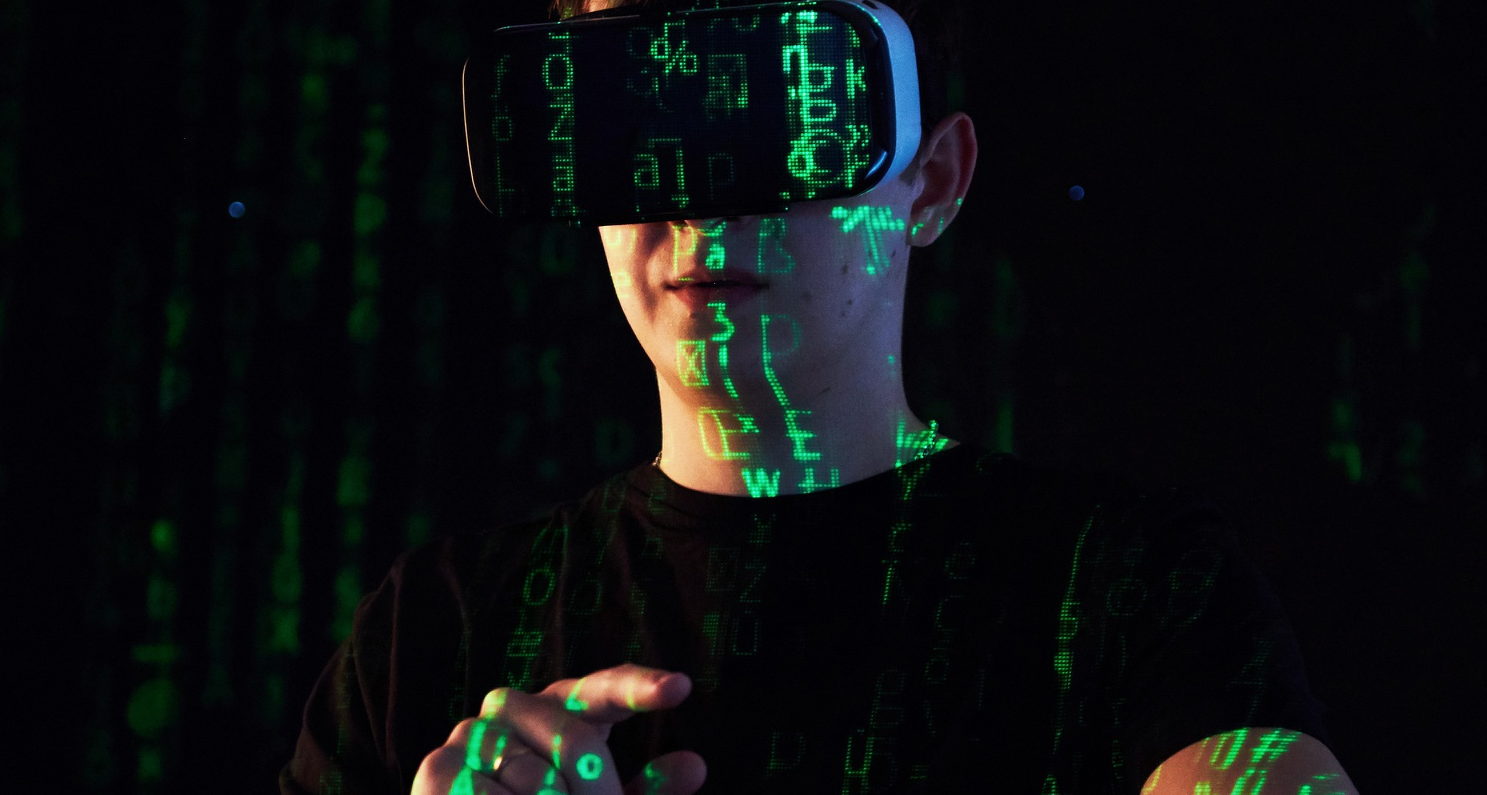

The glow of a phone screen feels different late at night than it used to. People lie awake in their bedrooms in places like Karachi, London, and San Francisco, talking instead of scrolling endlessly. They pause in between messages, waiting for answers that come in with a disturbing regularity. It’s a friendly tone. Be patient. Nearly paying attention. It’s difficult to ignore the fact that the pauses seem more like anticipation than boredom.
It doesn’t appear that artificial intimacy represents a significant advancement in technology. It appears to be comfortable.
The change appears to have occurred covertly under the guise of convenience. AI assistants initially assisted with email drafting and trivia answering. Then, as if reacting emotionally rather than logically, they began to recall personal information, including anxieties that had been mentioned weeks before. In isolation, these exchanges seem insignificant, but when they happen every day, they start to feel familiar.
Investors appear to think that one of AI’s most lucrative aspects will be emotional engagement. Artificial companions build relationships that people are reluctant to end, in contrast to traditional apps that have trouble maintaining users’ attention. The more intimate the exchange, the more difficult it is to leave. Despite being incredibly successful commercially, that dynamic raises issues that don’t easily fit into earnings reports.
| Item | Important information |
|---|---|
| Topic | Artificial intimacy: AI companions designed to simulate closeness, romance, friendship, and emotional support |
| Where it shows up | Companion apps, “character” chat platforms, voice bots, griefbots, flirty assistants, always-on DMs |
| Why it’s growing | Loneliness, frictionless comfort, personalization, 24/7 availability, and rapidly improving voice + text generation |
| What makes it different from misinformation | It doesn’t try to persuade you about the world; it tries to bond with you inside your private life |
| Who gets pulled in fastest | Teens, lonely adults, people in crisis, exhausted professionals, anyone craving nonjudgmental attention |
| Big risks people understate | Emotional dependency, manipulation-by-optimization, blurred consent, privacy leakage, harassment via synthetic images/voice |
| What’s still unclear | Whether these tools reduce isolation long-term, or quietly weaken real-world relationships and resilience |
| Credible references | FTC: inquiry into AI chatbots acting as companions • Common Sense Media: guidance on AI companions & teens • Digital Rights Foundation: GenAI-enabled sexual violence & “nudification” |
Naturally, loneliness predates artificial intelligence. People were already being torn apart by modern life—remote work isolating workers, social media substituting broadcasts for conversations, and cities crowded with infrequently speaking strangers. That emptiness wasn’t caused by manufactured intimacy. It just figured out how to fill it.
But there are restrictions on the filling.
Companions that are artificial never quarrel. They never stop showing love. They always remember to answer. In contrast, real relationships, which are characterized by uncertainty and conflict, seem ineffective. Because of this contrast, people may be gradually retraining their emotional expectations to value connection over inconvenience.
There is a sense of silent displacement as you watch this play out.
It is subtle when in public. A commuter ignores the person seated next to them and gives a slight smile in response to a message. Despite the fact that no one is physically present, a student strolling through a packed campus seems intensely involved. These times don’t seem concerning. They appear to be typical. Perhaps the most disturbing aspect is that ordinariness.
On a darker side, where exploitation and emotional simulation collide, artificial intimacy is also present. The same generative tools that produce reassuring companions can also be used to weaponize personal likenesses, fabricate intimate images, and manipulate identities. Women have already encountered this in Pakistan and other places due to harassment created by AI, which has changed their digital identities without their consent.
In the conventional sense, this is not misinformation. Something more intimate is involved.
Whether artificial intimacy will eventually increase or decrease emotional resilience is still up in the air. AI companions, according to proponents, can assist people in overcoming feelings of loneliness, anxiety, and loss. Critics fear that dependency could develop covertly, substituting simpler artificial connections for challenging but essential human ones.
Relationships have always been impacted by technology. In the past, letters were used to express love across continents. Voices were closer over telephones. Social media transformed communication into a show. The next step seems to be artificial intimacy, which replicates relationships completely rather than extending them.
That difference is important.
Artificial companions are emotionless. They forecast.
They optimize for engagement by generating responses based on patterns and making adjustments that are intuitive but essentially calculated. People don’t feel warm because of emotion. It’s the design. However, intellectually understanding that doesn’t always lessen its impact.
People give their gadgets names for a reason.
Attachment is created through naming. Loyalty is the result of attachment. Dependency is a result of loyalty. Previously only found in human relationships, these emotional loops are now purposefully created. Artificial intimacy may eventually become accepted as a part of everyday life and cease to feel artificial.
That normalization might happen gradually and imperceptibly.
After a challenging day, someone confides in a chatbot. Another looks for confirmation when things are unclear. The artificial presence eventually becomes a part of the emotional routine, taking up places that were previously occupied by family, friends, or partners.
