


There is a certain gleam to the premiere-night scene outside the Academy Museum of Motion Pictures in Los Angeles: security earpieces catching the light, camera shutters firing in little storms, and publicists guiding people with courteous urgency. From a distance, the event appears to be effortless. It’s a deliberate dance up close, with heels on the ground, voices raised just above the throng, and the scent of fresh flowers mingling with vehicle exhaust.
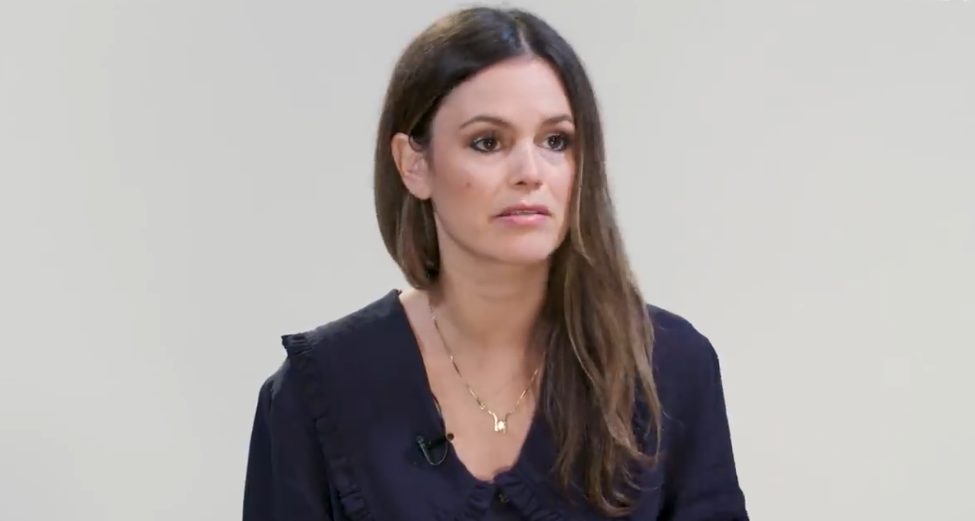
Alessandra Rich’s strapless velvet dress, which practically challenges the room to behave, was worn by Rachel Bilson when she arrived at the Scrubs Season 1 premiere. A bow. Lace trim. texture that, even in harsh flash photography, reads as opulent.
| Category | Details |
|---|---|
| Full name | Rachel Sarah Bilson |
| Born | August 25, 1981 (Los Angeles, California) |
| Known for | The O.C. (Summer Roberts), Hart of Dixie (Dr. Zoe Hart) |
| New project | Guest star in the Scrubs revival; role reported as “Charlie” |
| Revival notes | Premiere launched with two episodes back-to-back on ABC; streaming on Hulu |
| Official reference | IMDb profile |
Then came the styling decisions: hair that fell somewhere between purposefully undone and “we ran out of time,” tights, and a drawstring bag. Since some fashion commentators publicly questioned the reasoning behind it, it’s understandable why the discussion went viral. Clean lines are what a strapless gown is all about; the rest felt like a fight.
Nevertheless, it’s difficult to ignore the fact that Bilson has always behaved in this way in public: friendly, slightly off-center, and never quite pursuing the most overt version of herself. Her name coming up during the Scrubs revival is intriguing in part because of this. Since comfort rarely elicits surprise, the show is comfort-TV royalty. However, the casting announcement indicates that the revival is prepared to stir things up—gently, but deliberately.
According to Deadline, Bilson will play the role of “Charlie,” a “beautiful and elusive visitor” at Sacred Heart. That description seems almost archaic in its ambiguity, reminiscent of a character introduction from the early 2000s that was intended to keep the viewer interested. Christa Miller and Neil Flynn are making a comeback, according to the same report, which suggests the revival is striking a balance between the excitement of reunions and fresh sparks.
This particular triangulation is fascinating: Sarah Chalke, Donald Faison, and Zach Braff return as the core, followed by Bilson, who will always be associated with a different aspect of 2000s television, entering the fluorescent world of the hospital. The producers may be relying on a sort of cultural muscle memory, where viewers will recognize her face before they are even familiar with her persona. Now, that recognition is valuable. Too much value, perhaps. Networks and streamers now freely and occasionally carelessly spend nostalgia as money.
The launch of the revival has been planned to garner attention. In order to keep people talking in the middle of the week, ABC broadcasts two episodes back-to-back, followed by the weekly streaming rhythm. It’s not nuanced. The purpose of the schedule is to make asking “Did you watch?” a habit, similar to getting coffee. Everyone involved seems to understand the math: you need a recurring social moment in a crowded TV market, not just a show.
Additionally, Scrubs is the type of property that retains its gentle glow. It combined humor and gut punches without acting as though hospital work was neat. When you rewatch previous episodes, the hallways still have a lived-in feel to them—scuffed floors, worn-out faces, and the impression that interns are learning by making mistakes. While acknowledging that audiences and medicine have changed and that the show’s previous tone cannot simply be photocopied, a revival must recreate that texture.
At that point, Bilson’s appearance transcends a mere cameo. She has devoted years to portraying characters who act as emotional triggers, individuals who enter a space and alter its atmosphere. If Charlie is “elusive,” it implies that she is a character who takes her time telling her story and who could disturb the Sacred Heart rhythms instead of just adorning them. Whether her guest arc is a lighthearted diversion or something more serious—the kind of plot that leaves a bruise after the laugh—is still up in the air.
The red-carpet subtext is another: As though Hollywood wanted to present this return as an artifact, Bilson showed up in velvet for a medical comedy premiere, which was held at a movie museum. It’s strange to see these reboots pile up, one after the other. Not quite dread. It’s more like suspicion combined with curiosity. Is the industry running out of safer options, or are we returning to these shows because we enjoy them?
Even if the creative risk remains constant, investors appear to think that well-known titles lower risk. It’s a difficult balance because viewers want the traditional emotional payoff but also want to be surprised. Bilson may be one of those casting choices that attempts to appease both instincts simultaneously: he is unpredictable enough to warrant the revival’s existence while being recognizable enough to make headlines.
The simplest detail—an actress from one era entering another, grinning for the camera, and wearing a dress that almost works but then doesn’t—may ultimately be the most relatable. That small flaw—the argument over style, the “should this be happening?” clamor—feels strangely appropriate for Scrubs. The performance was never flawless. It was messy, emotional, dubious at times, and frequently humorous. In fact, the revival might merit its place if Bilson’s Charlie contributes even a small amount of that fruitful mess to Sacred Heart. Or it might simply serve as a reminder to everyone of how difficult it is to revive the past without making it into a memento.
