

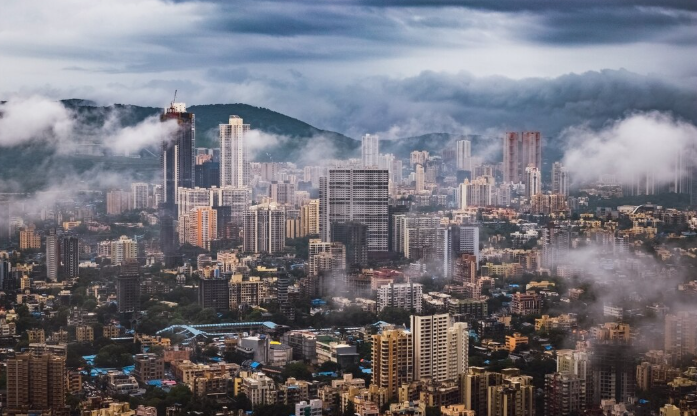

There are apartment buildings in the new developments surrounding cities like Wuhan and Zhengzhou that have been unfinished for the past three or four years. In certain areas, the scaffolding is still in place. The concrete is visible. The elevators were never installed, the walls are not tiled, the plumbing is not connected, and the floors are poured inside.
Families who paid for these apartments in full or nearly so, as Chinese real estate transactions require payment before the building is finished, are still making monthly mortgage payments to banks on the streets below. paying for a place they are unable to occupy. paying for a project that might never be completed. From the ground up, China’s property crisis resembles that scenario multiplied across dozens of cities and millions of households. The financial figures are astounding. It has a different human texture.
| Crisis Subject | China’s Real Estate Market Collapse (2020–Present) |
|---|---|
| Sector’s Share of GDP | Broadly contributes to approximately one-third of China’s GDP |
| Key Failed Developer | China Evergrande Group — defaulted, triggering sector-wide crisis |
| Most Recent Rescue Case | China Vanke Co. — taken under operational control by Shenzhen authorities (January 2025) |
| Vanke’s Reported Loss | Record $6.2 billion (projected); funding gap of ~$6.8 billion in 2025 |
| Mortgage Market Exposure | ~$6 trillion in bank mortgages at risk |
| Stalled Construction (2021 Data) | ~10% of homes sold in 24 major cities had stalled construction |
| Estimated Mortgages Impacted | At least 1.7 trillion yuan (~$250 billion) — China Merchants Securities estimate |
| Policy Trigger | Xi Jinping’s “Three Red Lines” policy (2020) — restricted developer financing to force deleveraging |
| China’s GDP Growth Slowdown | From 14.2% (2007) to 6.6% (2018); IMF projected 5.5% by 2024 |
| Reference Website | Bloomberg — China Property Crisis Coverage |
Beijing used a combination of carefully crafted assurances, controlled defaults, and a calculated reluctance to overtly intervene in markets that the government had purposefully pushed to their breaking point to manage this crisis for years. The “Three Red Lines” policy, which Xi Jinping’s administration drafted in 2020 to limit developer financing in an effort to force a sector that was heavily indebted to reduce its leverage, actually caused the cascading defaults that it was intended to stop.
One of the biggest corporate debt failures in history, China Evergrande was once the nation’s biggest real estate developer by sales before collapsing in spectacular slow motion. Beijing allowed it to occur for a while. The underlying message was that moral hazard was important, that careless borrowing would have repercussions, and that the government would not just cover the losses of all overleveraged developers who had built their companies on the presumption that home prices in China could only move in one direction.
That message was met with resistance in January 2025 when China Vanke, one of the industry’s last remaining titans and long regarded as Evergrande’s more cautious, better-managed substitute, warned of a record $6.2 billion loss and saw its bond prices plummet. Vanke’s hometown of Shenzhen’s authorities intervened to assume operational control.
In order to help the developer close a funding gap of about $6.8 billion for the year, officials started developing a plan. Put differently, Beijing blinked. The government concluded that Vanke was too big, too interconnected, and too symbolically significant to be permitted to fall the way Evergrande had fallen after four years of steadfast opposition to developer rescues. Observing this from the outside gives the impression that the choice was made out of necessity rather than confidence, which is significantly different.
At the core of all of this is a structural issue that Xi’s administration intentionally created and is currently finding it difficult to resolve without causing the wider collapse it was attempting to avert. Chinese buyers of real estate have nearly always bought new homes before they are constructed; this presale model relies on developers having sufficient cash flow to finish building. Construction ceased when Evergrande and numerous smaller developers ran out of funds, but the mortgage obligations persisted. In response, homebuyers in 22 cities did something uncommon in modern-day China: they organized their refusal. On unfinished homes, they ceased making mortgage payments.
The protest transferred the credit risk from offshore developer bonds, where losses were mostly absorbed by foreigners, directly into the domestic banking system, which has about $6 trillion in mortgages. According to China Merchants Securities, construction delays in major cities could impact mortgages worth at least 1.7 trillion yuan, or roughly $250 billion. These figures are not speculative. Chinese banks currently carry them as part of their balance sheets.
All of this is much more difficult to resolve in light of the larger economic context. Rising home prices, growing household debt linked to real estate, export-driven manufacturing, and fixed investment in infrastructure and construction were the main pillars of China’s growth story for decades. At its height, real estate alone, including associated industries, accounted for nearly one-third of GDP.
That focus was always a weakness. In essence, Xi was attempting to deflate an asset bubble that had become so intertwined with the rest of the economy that there was no clean way to do so when he started his deleveraging campaign. The IMF predicted further slowing of GDP growth, which had already decreased from 14.2% in 2007 to 6.6% in 2018. The government had already prepared the populace to accept the “new normal” of slower growth. A property crisis severe enough to make even that slower growth rate seem hopeful was something it hadn’t fully prepared for.
It’s difficult to ignore how extensively this is still portrayed as China’s issue, at least in the Western financial press. Although it makes sense, that framing is most likely lacking. In terms of purchasing power parity, China’s economy is the largest in the world. It is also the world’s largest manufacturer, the world’s largest trader of goods, and the largest foreign owner of U.S.
Treasury securities. Global supply chains, commodity markets, and emerging economies that rely on Chinese demand are all affected when Chinese consumers cut back on spending because their main asset, their apartment, has lost value or is still unfinished. Iron ore exports from Australia. Soybeans from Brazil. German machinery. There are many, well-established connections. The timing and intensity of the transmission, which hinge on Beijing’s ability to contain a crisis that keeps finding new companies to swallow, are less certain.
The official stance that the situation is under control while taking emergency operational control of one of the nation’s biggest real estate companies, announcing rescues it spent years insisting it would never do, and managing information about developer losses that seem to increase with each quarterly filing are all examples of how China’s government is navigating this.
It seems that the gap between the public posture and the private reality has grown uncomfortably wide. The government’s ability to absorb losses through state banks and directed lending may be greater than Western debt-crisis analogies imply, and Beijing may have resources that outside analysts undervalue.
It’s also possible that the amount of misallocated capital in China’s real estate sector is so great that it cannot be completely resolved by managed deleveraging without a protracted period of stunted growth, weakened banks, and lowered household confidence. It is possible for both to be partially true at the same time. The truth is that no one outside of China’s central planning apparatus can say with certainty which scenario is more likely to occur. This uncertainty poses a serious and underestimated risk to both international investors and trading partners.
