


When was the last time you looked over your monthly expenses? Groceries, utilities, rent or a mortgage, and insurance. For the majority of working adults, the insurance line consists of a number of items that feel both necessary and pricey at the same time: home contents, auto insurance, and possibly life insurance if dependents are involved. If income protection insurance is available at all, it is frequently put aside as a nice-to-have that can wait until one’s financial situation improves. Because most people are unaware of it, the tax relief that makes it significantly less expensive than the headline premium is rarely discussed.
There is a real cost associated with that knowledge gap. Income protection premiums in Ireland are eligible for tax relief at the marginal rate, which means that after accounting for the relief, a higher-rate taxpayer paying 40% income tax will see a 40% reduction in their effective monthly premium. A policy that used to cost €100 a month now only costs €60.
That amounts to €480 in relief over the course of a year on a single, modest premium. The figures quickly become more significant for someone paying higher-rate tax on a larger policy that covers a greater percentage of their income. The relief is applicable to premiums up to a maximum of 10% of total annual income, which means that it scales with earnings in a way that makes it truly significant for individuals with varying income levels.
| Category | Details |
|---|---|
| Product | Income Protection Insurance — pays a regular monthly income (typically 50–70% of salary) if you cannot work due to illness or injury |
| Also Known As | Permanent Health Insurance (PHI) — the term used by Revenue/HMRC in official classification |
| Tax Relief Availability | Available in Ireland at your marginal rate — either 20% or 40% depending on your income tax band |
| Premium Limit for Relief | Tax relief applies to premiums up to a maximum of 10% of your total annual income |
| Higher-Rate Example | Monthly premium of €100 → Tax relief of €40 → Real cost to you: €60 per month |
| Standard-Rate Example | Monthly premium of €100 → Tax relief of €20 → Real cost to you: €80 per month |
| How PAYE Workers Claim | Log into Revenue MyAccount → PAYE Services → Manage Your Tax → Claim Tax Credits → Health → Permanent Health Insurance |
| Self-Employed Workers | Claim via annual tax return; if employer/company pays premium, corporation tax relief typically applies instead |
| Executive Income Protection | Premiums paid by employer qualify as business expenses; no Benefit-in-Kind for employee; benefits paid via salary subject to tax and USC |
| Tax Status of Benefit Payments | If you personally paid premiums (no prior tax relief on payments), benefits received are tax-free. If employer paid, benefits taxed as income through PAYE |
| Ireland-Specific Rule | Benefits subject to income tax, USC, and PRSI when paid out — regardless of who paid the premiums |
| UK Position | Personally funded policies: benefits paid tax-free. Employer-funded policies: benefits taxable as income |
The system functions because Revenue uses its Permanent Health Insurance regulations to categorize approved income protection plans. This is a concept that most people are unfamiliar with but that has significant financial ramifications. When a policy meets PHI requirements, the premiums are essentially considered an individual’s tax-deductible expense, which lowers your net income for taxation purposes. Although the comparison isn’t perfect, it is structurally comparable to pension contributions.
The majority of people with Irish tax affairs will already have access to Revenue’s MyAccount system, which is used by PAYE workers to process claims. It’s not too difficult to navigate the portal: Manage Your Tax, Claim Tax Credits, locate the Permanent Health Insurance option, input the annual premium amount, and your tax credits will provide the relief. You will receive an annual statement from your insurance provider that details the premiums you have paid.
Anyone who works for themselves or manages a business should be aware of this additional layer. Many company directors and business owners use the executive income protection structure, which operates differently from a personal policy in that the company, not the individual, pays the premiums, making it a deductible business expense for corporation tax purposes.
Benefit-in-Kind liability usually does not exist for the employee. In the event that a claim is filed, the benefit is paid to the employer and goes through the payroll in the standard manner, subject to income tax, USC, and PRSI. It’s a more complicated structure, and whether it’s suitable depends on specific circumstances, but it’s one of the more tax-efficient ways to incorporate income continuity into a business for independent contractors who have traditionally been left out of employer sick pay plans.
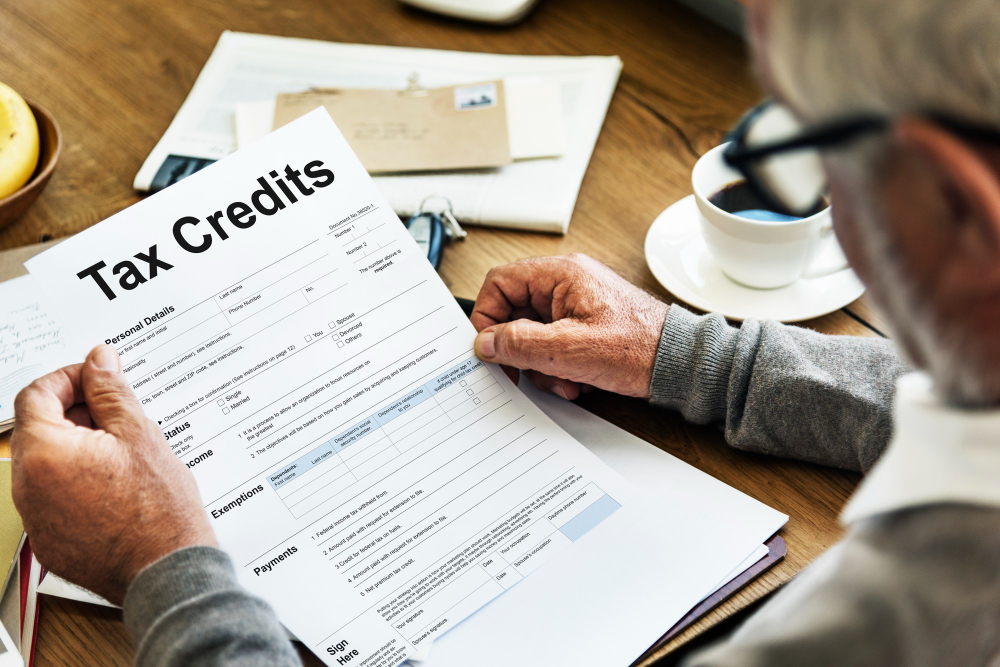
It’s important to be clear about the tax treatment of the payments when you actually make a claim, as this is the aspect that most frequently causes confusion. Benefit payments from income protection policies are subject to income tax, USC, and PRSI in the same manner as employment income in Ireland, regardless of whether the policy was personally or employer funded. The UK’s position on personally funded policies, where benefits are typically paid tax-free because the premiums were paid from already-taxed income, differs significantly from this. In Ireland, the reasoning is reversed: you pay tax when you receive the benefit, and you receive relief when you pay the premium. It’s a purposeful design, not a ruse or a secret sting. In comparison to having no policy at all, the overall result is still financially advantageous for the majority of people. However, it’s important to understand the whole picture before speculating about what you might receive during a claim.
The degree to which short-term sick pay arrangements have been undermined or have never existed for significant segments of the workforce is what makes income protection especially pertinent in the current financial environment. While recovering from a serious illness or injury, statutory sick pay schemes offer a floor, but this is frequently insufficient to cover childcare, mortgage payments, or other household expenses. Income protection is found in the gap between statutory support and actual household expenses, and the tax relief that applies to it is essentially the government’s recognition that closing that gap has social value worth encouraging.
It’s difficult to ignore the fact that uptake is still lower than what these policies’ theoretical justifications would imply. The general human propensity to underestimate the likelihood of long-term illness or injury contributes to this. Cost perception plays a part in this; even when the post-relief cost is significantly lower, the headline premium feels like an addition to an already tight budget. The fact that the people who stand to benefit the most from comprehending the relationship between the insurance product and the tax benefit have never been adequately informed is also a contributing factor. A post-relief premium of €60 per month may be one of the more sensible financial choices for a PAYE worker in their thirties who is paying the 40% rate, has a mortgage, and lacks significant savings to cover a prolonged period of unemployment. It is another matter entirely if they are aware of it.
