


Financial markets currently have an odd split-screen appearance. Traders in lower Manhattan are pushing the S&P toward yet another high on one screen, discussing a soft landing in the same way that people discuss a vacation that has already been scheduled. However, crude is hovering around $120 per barrel, oil tankers are circling close to Oman, and economists who don’t typically raise the alarm are quietly doing just that. It’s uncomfortable to watch the dissonance develop, and it seems like one of these screens will have to blink first.
On its face, the argument for market optimism is not irrational. In the past, disputes have had a brief impact on asset prices. Sharp drawdowns were followed by swift recoveries in the Gulf War, the invasion of Iraq in 2003, and even the early weeks of 2022 in Ukraine. Right now, investors’ pattern recognition reflex is telling them to buy the dip. The market is pricing in a speedy victory that is far from certain, according to Peter Schiff, a professional allergic to consensus optimism. The word “dangerously” fits the tape better than the headline numbers would imply, and he used it in a Facebook post last month.
| Topic | Market complacency vs. economic reality during the Iran conflict |
| Crude Oil Price (recent surge) | ~$70 → ~$120/barrel in three weeks |
| Estimated US Recession Risk | Approaching 50% |
| Key Geopolitical Flashpoint | Strait of Hormuz blockade |
| China’s Recent Export Growth | 2.5% (sharp decline from forecasts) |
| Notable Voices Warning | Peter Schiff, Ray Dalio, Larry Summers, IMF Chief Economist |
| Vulnerable Portfolio Strategy | Traditional 60/40 stocks-and-bonds mix |
| Years of 60/40 Double-Digit Losses | 2008 and 2022 |
| Xi Jinping’s April 2026 Statement | “International order is crumbling into disarray” |
| Source for Recession & Inflation Tracking | NBER Business Cycle Dating Committee |
| Key Risk Combination Identified by SIEPR | Higher interest rates + slower growth + large deficits |
| Most Affected Markets | Equities, bonds, oil, emerging-market currencies |
It is unusual for crude to go from about $70 to almost $120 in three weeks. In a commodity that affects everything—fuel, freight, fertilizer, packaging, and the price of transporting a head of lettuce from California to a Manhattan deli—that is more than 60%. The second-order effects take time to appear in CPI prints when energy prices rise that quickly, but they nearly always do. October’s economy was unaffected by the 1973 oil shock. It broke it gradually in 1974 and then all at once in 1975.
Beijing, meanwhile, seems genuinely alarmed. The claim made by President Xi that the international order is “crumbling into disarray” was not made lightly. The choice of words was important coming from a leader whose public communications are typically surgical. China’s exports only increased by 2.5 percent, far less than expected, and this softness will spread. In a post earlier this month, Ray Dalio explained that the current situation is part of a self-reinforcing cycle that cannot be broken without significant policy intervention or, in his less consoling words, some kind of regime change.
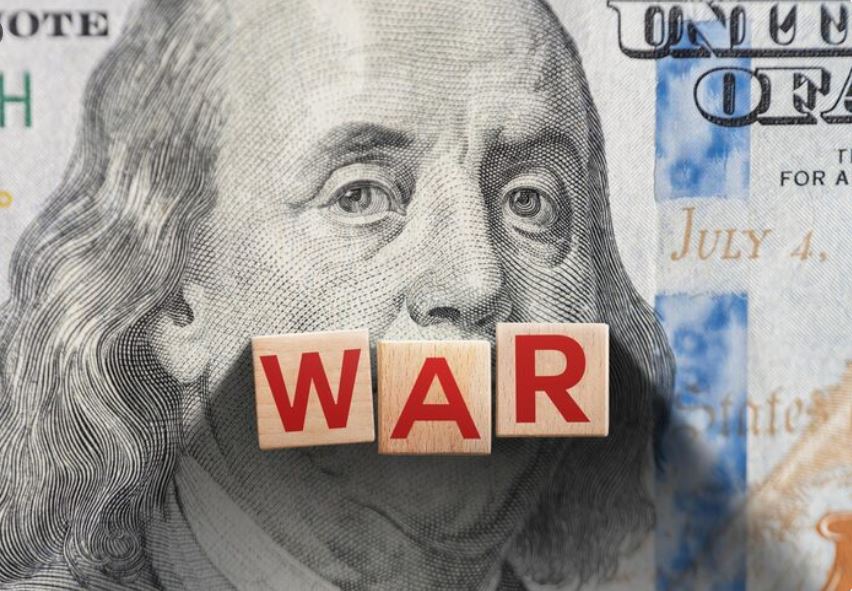
It is more difficult to defend the optimism in light of the financial situation. According to a recent Stanford SIEPR brief, the US may be approaching a period in which the real interest rate is no longer comfortably below the growth rate—a calculation that for decades made the country’s debt appear manageable. Longtime deficit dove Larry Summers told The Atlantic that the situation has shifted from green-light to red-light. Something has changed beneath the surface when the doves begin to sound hawkish.
The awkward question of what investors are truly betting on is another. Twice in fifteen years, in 2008 and 2022, the 60/40 portfolio that served as the foundation for a generation of retirement plans failed. Clients are being pushed by UBS and others toward alternatives, gold, private credit, real assets, and other items that are meant to function when the typical correlations cease to do so. One of those signals worth paying attention to is gold’s quiet ascent in recent months.
In the context of $120 crude and a precarious ceasefire, it’s difficult to ignore how happy the trading floors appear. In the past, markets have misjudged wars. Additionally, sometimes for the wrong reasons, they have been correct. The price of oil in September, whether the Strait remains open, and whether the Fed has any more room to cut are just a few of the factors that will determine how well this rally ages. Wall Street is behaving as if the war has already ended for the time being. The economists are unsure. The tankers off the coast of Oman are still waiting.
