

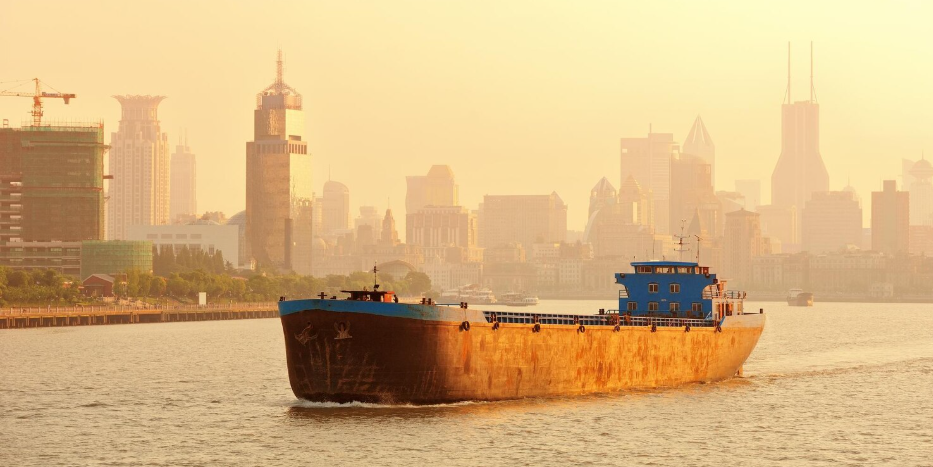

Between the southern coast of Iran and the tip of the Omani peninsula, where the Persian Gulf empties into the Gulf of Oman, is a stretch of water that is only 21 miles wide at its narrowest point. It hardly shows up on most maps. It is practically everything on shipping charts, energy forecasts, and the spreadsheets of finance ministries from Berlin to Tokyo. For something so small geographically, the Strait of Hormuz has always carried an excessive amount of weight. It is now nearly impossible to ignore that weight.
Commercial traffic across the strait has virtually stopped for the past four weeks. One of the biggest disruptions to the world’s energy infrastructure in recent memory has resulted from attacks on ships, real threats from Iranian military forces, and nearly crippling uncertainty among shipping companies.
| Category | Details |
|---|---|
| Name | Strait of Hormuz |
| Type | International Maritime Strait / Strategic Chokepoint |
| Location | Between Iran (north) and Oman/UAE (south); connects Persian Gulf to Gulf of Oman |
| Width (narrowest point) | Approximately 21 miles (33 km) |
| Daily Oil Flow | ~20% of global petroleum supply |
| Daily LNG Flow | ~20% of global liquefied natural gas |
| Bordering Countries | Iran, Oman, United Arab Emirates |
| Governing Legal Framework | UNCLOS 1982, Article 38 (Right of Transit Passage) |
| Current Status (2026) | Severely disrupted; estimated 2,000 vessels stranded |
| Key Affected Exporters | Saudi Arabia, UAE, Qatar, Iraq, Kuwait |
| Oil Price Impact | Surged to nearly $120 per barrel |
| Reference | U.S. Energy Information Administration – Strait of Hormuz |
Even for those who live far away from the Persian Gulf, it’s difficult to ignore the scope of what is happening. One morning, they might open their gas bill and notice a subtle change.
The statistics underlying this crisis are concrete. Every day, about a fifth of the world’s liquefied natural gas and about 20% of the world’s petroleum travel through this one corridor. Iraq, the sixth-largest oil producer in the world, has reduced its daily output from Basra by about 70%, from 3.3 million barrels to about 900,000. Saudi Arabia closed its largest processing plant, the Ras Tanura refinery, which handled 550,000 barrels per day.
Force majeure, a phrase that typically denotes extreme weather or acts of God, has been invoked by Qatar Energy, Shell, and Kuwait Petroleum Corporation. This isn’t either. This pressure point is being intentionally squeezed.
Until they don’t, oil prices rising toward $120 per barrel seem unreal. The cost of wholesale gas in Britain has more than doubled. The Dutch gas market has increased by almost 25%. In just the first part of March, Asian LNG benchmark prices increased by nearly 39%. Together, Qatar and the UAE supply nearly a third of China’s LNG imports, 72% of Bangladesh’s, and 53% of India’s. These numbers are not marginal. The closure of the strait is a geographically specific inflation event rather than a local annoyance.
Observing this moment from the outside is especially unsettling because of the impasse it contains. In order to create a credible coalition that could put pressure on Iran to return to the negotiating table, the United States is encouraging allies to participate in naval escort operations.
However, those same allies are standing their ground, demanding a ceasefire before making a significant military commitment. Pressure on Iran is still blunt in the absence of a coalition. The ceasefire appears far off in the absence of pressure. In the Arabian Gulf, about 2,000 ships are waiting for someone to move first in a classic chicken-and-egg standoff.
This crisis also has a legal component that has gotten far less attention than it merits. Long before the United Nations Convention on the Law of the Sea was drafted, customary international law upheld the right of transit passage through international straits, making it more than just a courtesy.
In the Corfu Channel case from 1949, the International Court of Justice ruled that international straits must continue to be accessible for peaceful navigation. Iran’s successful closure of the Strait of Hormuz is in awkward conflict with commitments that predate any contemporary geopolitical grievance.
It’s still unclear if Iran intended for the military pressure on the strait to be this persistent or if it fully considered the international legal exposure it now faces. There is a feeling that the closure started out as a signal and has since evolved into a trap that is getting harder to avoid without giving the impression that either side is making a concession.
The uncertainty has only increased since Iran’s top naval commander was assassinated in Bandar Abbas, adding a layer of internal pressure in Tehran that is difficult for outside observers to discern.
In all of this, the states of the Gulf Cooperation Council are not doing nothing. Oil has been redirected by Saudi Arabia to the Red Sea port of Yanbu via the East-West pipeline. Overland pipelines have been used by the UAE to reroute flows. These are significant logistical achievements.
However, they are also insufficient answers. They don’t cover everything. They are more expensive. Additionally, they put strain on infrastructure that was never intended to support such a heavy load for such a long period of time.
The lack of suitable alternative routes is a vulnerability that energy economists have identified for decades but that policy has seldom felt urgent enough to address.
This vulnerability has been made clear by the crisis. When Hormuz becomes unusable, pipeline infrastructure that links GCC producers directly to the Arabian Sea could act as a true bypass. The investment was always prudent. It appears necessary now. The argument put forth by the strait is that no energy minister’s PowerPoint has ever quite succeeded.
There is a sense that for years, the world has been conducting a covert experiment to see how much geopolitical risk a single maritime chokepoint can withstand before something important breaks. It turns out that the solution is not as good as anyone had anticipated. T
here is more to the Strait of Hormuz than just a pressure valve. It serves as a reminder that despite its sophistication, international trade is still reliant on a small area of water and the political will of the surrounding states. Both feel dangerously thin right now.
