

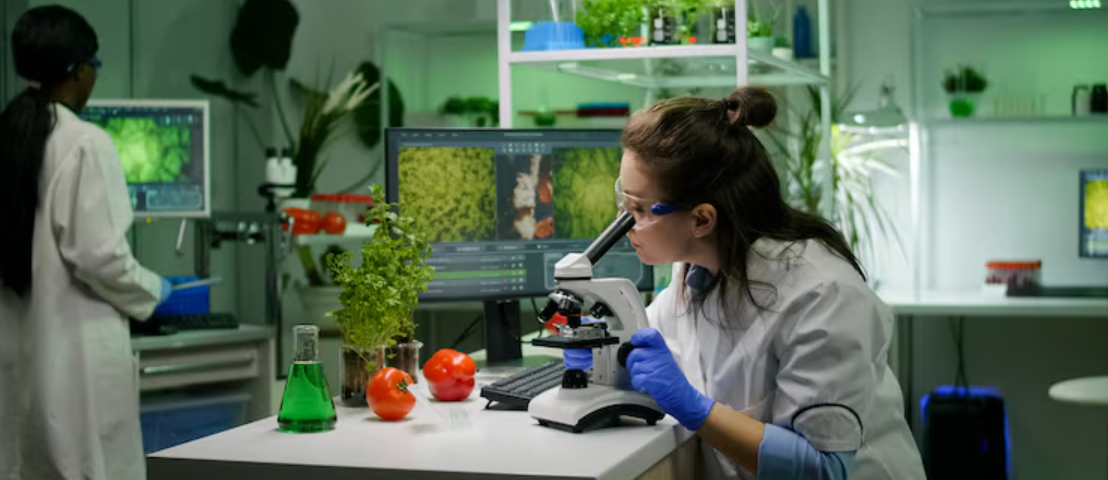

Silicon Valley or Shenzhen might not have the most advanced engineering lab on the planet. It could be the ocean floor, the forest outside the window, or even an ant colony scuttling along a sidewalk.
For many years, scientists have discreetly taken inspiration from nature, observing how living systems resolve issues that engineers continue to face. After all, for hundreds of millions of years, evolution has been conducting experiments. Researchers seem to pause just because of that fact. There’s probably something worth researching if a biological solution lasted that long.
| Category | Information |
|---|---|
| Field | Biomimicry / Nature-Inspired Computing |
| Core Idea | Designing technology by studying biological systems and natural processes |
| Key Research Areas | Evolutionary algorithms, swarm intelligence, neural networks, biologically inspired design |
| Example Institution | Center for Biologically Inspired Design, Georgia Institute of Technology |
| Applications | AI optimization, robotics, medical diagnostics, material design, environmental forecasting |
| Key Principle | Natural systems solve complex problems through adaptation and self-organization |
| Related Scientific Movement | AI for Science (AI4S) |
| Reference | https://www.gatech.edu |
This curiosity has developed into a serious field called biomimicry, or nature-inspired computing, inside labs from Atlanta to Tokyo. The idea is incredibly straightforward: take note of how nature functions, then apply those lessons to machines, algorithms, and technologies.
With precisely that goal in mind, researchers at the Georgia Institute of Technology established the Center for Biologically Inspired Design. There’s a strange mixture of engineering diagrams and biology textbooks strewn across desks in their research areas. It feels more like a place where software engineers and biologists unintentionally ended up working side by side than a typical engineering department.
The rationale for this partnership is surprisingly pragmatic. Every living species has already found a solution to a design issue. Crabs use chemical signals to navigate through turbulent water. Compared to most aircraft, birds are better at managing energy efficiency while in flight. Even bacteria are remarkably coordinated in their self-organization. These behaviors are starting to be viewed by scientists as blueprints rather than merely biological curiosities.
Consider evolutionary algorithms. By allowing potential solutions to compete and adapt until the best one survives, they imitate Darwin’s theory of natural selection. It feels oddly natural to watch these algorithms operate. Weak solutions vanish. Stronger ones develop. The system gets better over time.
These days, engineers use this process to optimize things like industrial materials, energy systems, and aircraft designs. It can be surprisingly effective at times. However, there is still a perception that the digital version is merely a shoddy replica of the original. Simply put, nature is more complex.
Swarm behavior is another biological concept. Fish schools, bird flocks, and ant colonies all coordinate their movements without a single leader. Even though everyone abides by basic rules, the group acts wisely.
Swarm intelligence algorithms are utilized in robotics, logistics planning, and even traffic optimization as a result of this observation. Particle swarm optimization is a well-known example that simulates groups of agents investigating potential solutions to complex problems.
It can feel strangely familiar to watch the simulations play out. A virtual landscape is traversed by tiny digital particles that search, adapt, and collaborate. It resembles looking at a tiny ecosystem. However, this research’s goals go beyond algorithms.
Nature-inspired design, according to some scientists, may eventually result in machines that can adapt to their surroundings in ways that existing technologies are unable to. By identifying patterns in data and gradually improving their behavior, artificial neural networks already mimic the structure of the human brain.
Future systems might incorporate multiple layers of biological inspiration, such as neural networks for cognition, swarm dynamics for cooperation, and evolution for architecture. The end product might resemble a digital organism rather than a conventional machine.
Naturally, there is also some skepticism in the field. Strong metaphors can be found in nature, but they can also be deceptive. Not all biological processes are easily translated into engineering.
Sometimes, researchers caution against what they refer to as “unreasonable metaphors,” in which designers superficially mimic nature without comprehending the underlying mechanisms. The discipline is plagued by that risk. Nevertheless, the momentum persists.
There may be a practical component to the explanation. Slow cycles of hypothesis and experiment are frequently used in traditional scientific research. However, algorithms inspired by nature and artificial intelligence are beginning to speed up discovery itself. Certain systems have the ability to automatically produce scientific hypotheses by looking for patterns in massive datasets that people might miss. Silently, science is starting to mimic the adaptive mechanisms it investigates.
From a distance, the situation seems strangely poetic. For centuries, humans have attempted to use technology to control nature. These days, closer examination of nature appears to be the source of the most promising technological concepts. It’s difficult to overlook the irony as you watch this play out.
Natural systems may not be conquered by the most sophisticated machines of the future. They might be the ones who eventually figure out how to act like them.
