


Long-suffering quantum investors are able to identify a specific type of trading day as soon as it starts. It feels different in the pre-market chatter. The headlines accumulate more quickly than the analysts can respond. Then, before most people have finished their coffee, the opening bell rings, and a stock like Rigetti Computing jumps thirty percent.
That’s about what took place on Thursday. Rigetti ended the session at $22.04, up 30.57%, and by Friday morning at 4 a.m., it was already trading close to $24.10 in pre-market. Washington was the catalyst, as almost everyone in the industry is now aware. Through a letter of intent with the Commerce Department, the Trump administration committed approximately $2.013 billion in incentives to nine quantum and chip-related companies, with Rigetti receiving approximately $100 million over three years. Not a final agreement. a declaration of intent. However, that distinction didn’t seem to matter much to the market.
It’s not just the money that makes this moment intriguing. It’s the framework. Similar to how the Commerce Department acquired about 10% of Intel in August of last year, the government is obtaining minority equity stakes in the recipients in exchange for the funding. Investors have begun referring to it as the “Intel-style” model, a term that sticks because it accurately describes the situation. These days, the state does more than just write checks. It’s turning into a shareholder. And after that, the rules of valuation begin to take strange turns.
For background, Rigetti creates superconducting quantum systems, which are qubits that are cooled to temperatures lower than deep space and operate inside cryostats that resemble industrial sculpture rather than computer hardware. According to CEO Subodh Kulkarni, the additional funding will enable the business to “tackle key scaling bottlenecks” and move closer to what he refers to as utility-scale quantum computing. That statement is powerful, but it also quietly acknowledges that we haven’t arrived yet. Nowadays, a quantum machine uses the majority of its processing power to fix its own mistakes. The majority of practical applications are still theoretical. The payoff may take years, as senior Commerce officials have admitted.
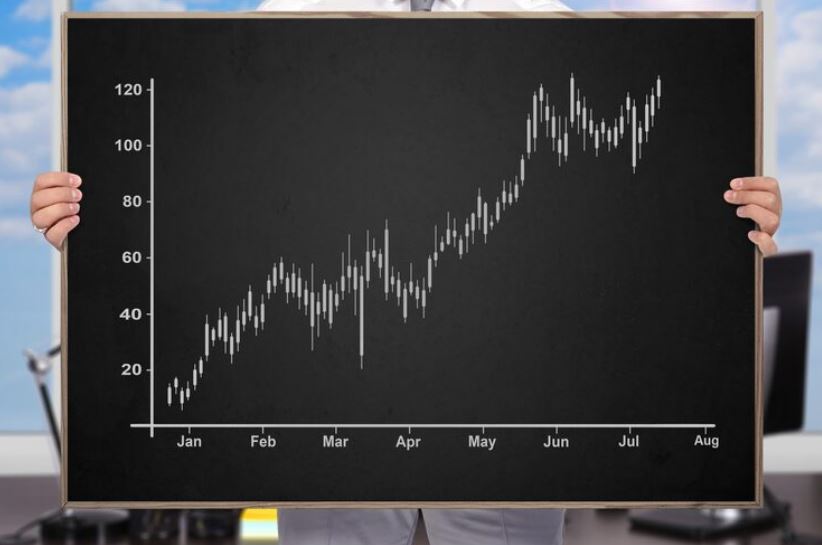
Nevertheless, the chart conveys its own narrative. From $10.30 to $58.15, Rigetti’s 52-week range is so broad that it almost seems like two different stocks were put together. For a company with $4.4 million in quarterly revenue, the market capitalization is currently over $7 billion. As expected, there is no P/E ratio. Traders believe that fundamentals are no longer a useful lens in this situation. Policy, narrative, and the federal government’s readiness to take on early-stage risk on behalf of private capital are now important factors.
The similarities to other periods in the history of technology are difficult to ignore. Before becoming the most watched stock in the world, Tesla endured years of mockery. Before geopolitics virtually instantly transformed semiconductor names into national assets, they were written off for decades. Quantum might take a similar course, or it might let everyone down. Both possibilities are still genuinely feasible.
For now, the majority of retail investors on Reddit and elsewhere are applauding. The 75% drawdown that quantum names experienced earlier this year, when QBTS fell below $13 and Rigetti appeared to be heading back toward the single digits, is still causing losses for some. The underlying questions remain the same, but the tone has changed. Are these devices truly capable of doing anything beneficial? When? Does it make a financial difference if the response is “eventually” as opposed to “soon”?
You get the impression that investors aren’t actually purchasing Rigetti’s goods when you watch the tape on a day like Thursday. They are purchasing Washington’s pledge. No one can yet determine whether that will be sufficient to maintain a $7 billion valuation during the next downturn. There might not be much to settle at the next earnings report, which is scheduled for August. In the interim, however, the stock will continue to tell its tale—loudly, sharply, and according to its own strange timetable.
