


On June 5, traders on the New York Stock Exchange floor witnessed a market that had been producing successive winning weeks abruptly and forcefully halt. The Nasdaq Composite saw its biggest one-day decrease since the tariff pandemonium of April 2025, falling 4.18 percent in a single session, losing 1,121 points to settle at 25,709. The S&P 500 saw a 2.64 percent decline.
The Dow lost 695 points. As of that Friday, the S&P 500 was up about 8% for 2026 thanks to an AI-fueled rally that had boosted the index to several all-time highs during the previous two months. The surge then came to an abrupt end as three things occurred almost simultaneously.
Broadcom was the most direct cause. Although not disastrous, the chip company’s earnings on Wednesday night did not improve its outlook for AI chips as investors had come to expect from the industry’s top players. In response, Nvidia saw a 6% decline. Intel and AMD came next. Analysts had been pointing out for weeks that the AI-related tech companies had priced in a level of future profitability that the actual forecast wasn’t yet supporting, but the reaction was more widespread.
A sector that was already costly to begin selling used Broadcom’s data as a justification, and Friday’s session made that caution much more acute. It was the week that the AI trade struck its first significant wall in more than a year, according to a Wall Street desk note.
The news about geopolitics was not helpful. After an American helicopter was shot down in the Middle East, U.S. forces attacked Iranian air defense facilities, intensifying a conflict that had been growing more tense over the previous few weeks. The military action increased bond yields, which in turn decreased the relative appeal of growth stocks that trade on long-duration earnings expectations.
This is the kind of risk aversion that leads institutional investors to reduce exposure to equities generally and shift toward cash and Treasuries. The news caused oil prices to rise. Rising rates and increased energy costs coincided with investors’ already uneasy reaction to the Broadcom earnings, resulting in the kind of focused selling that turns a poor session into a record one.
Beneath it all was the May jobs report, which was far better than anticipated. Normally, a hot labor market is comforting, but in this case, with inflation worries already high and the Federal Reserve under new Chair Kevin Warsh preparing for its first policy meeting on June 16–17, strong employment figures raised the possibility that rates might remain higher for longer or even rise.
At the June meeting, investors appear to think the Fed would remain unchanged. It’s still unclear if a high CPI reading before to that meeting affects the computation. Overnight, there was an immediate impact on Asian markets: Samsung Electronics and SK Hynix both saw significant declines as the chip selloff followed the sun westward, with South Korea’s Kospi falling more than 5%.
Looking at the series of events that led to last week’s collapse, it seems likely that the market was taken aback by all three pieces of news coming at the same time rather than by just one. A mild down day might have been caused by the AI trade, geopolitical risk, or Fed worry alone.
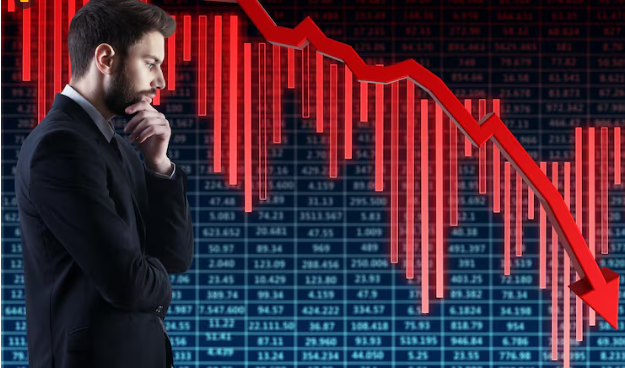
When combined, they resulted in the worst session for the Nasdaq in more than a year. Every trading desk is currently debating whether the selloff becomes a long-term correction or stabilizes into a buying opportunity. The S&P 500 continues to rise this year. Though not as much as it was two weeks ago, that context is still working.
