


On a Saturday morning, you may still find escudo coins in tiny plastic bags, sometimes labeled, sometimes not, selling alongside vintage postcards and ceramic tiles for a few euros in a Lisbon antique market. Practically speaking, they are not worth their face value. At the end of 2002, the Banco of Portugal ceased to redeem escudo coins. On February 28, 2022, the central bank eventually closed the window for exchanging banknotes, which had been open for much longer than most people had anticipated. Collectibles, drawer contents, and tangible proof that Portugal had a currency that it had been using, in one way or another, since 1911 are all that are left.
The escudo took the role of the Portuguese real, which had a centuries-old name and, by the early twentieth century, its smallest denomination, the déis, had devalued to the point where transactions for everyday purchases required thousands. Following the Portuguese Republic’s declaration the year before, the escudo was launched on May 22, 1911, and it was divided into 100 centavos. The Estado Novo dictatorship, the Carnation Revolution of 1974, and Portugal’s admission into the European Community in 1986—the event that ultimately put the nation on a collision course with a shared European currency—all occurred during the ensuing nine decades.
The conversion rate of €1 = 200.482 escudos, which was established when Portugal locked the escudo to the euro, has a peculiarly exact feature that illustrates the workings of exchange rate fixing. Portugal became one of the eleven founding members of the eurozone on January 1, 1999, but it took three more years for actual euros to arrive in people’s wallets.
The escudo continued to be the money that was exchanged at the market stall and café counter, but the euro was genuine in the legal and accounting sense throughout that transitional period—prices were occasionally shown in both currencies, and the exchange rate was fixed. Living in two monetary systems at the same time—one tangible and one theoretical—may have given regular Portuguese citizens an odd cognitive experience during the three-year overlap.
The physical transition took place on January 1, 2002, when all twelve of the eurozone’s nations began using euro coins and banknotes on the same day. Portugal’s dual circulation period, during which both currencies were accepted as legal currency, ended on February 28, 2002, after precisely 59 days.
The rapidity at which that shift occurred was intentional; the longer two currencies are used as legal tender, the more uncertainty and conflict there is in regular business dealings. The public rapidly adjusted, as people usually do when the alternative is just not being able to purchase groceries, retailers repriced everything, and banks recalibrated their systems.
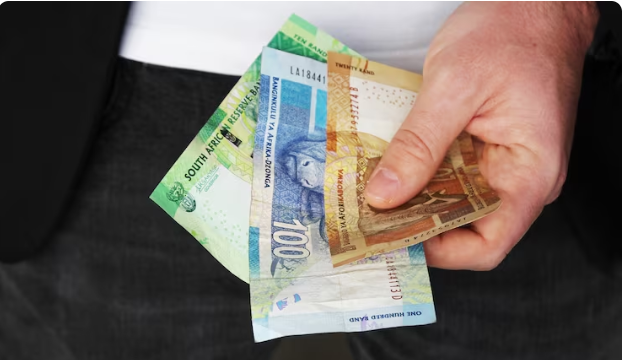
The long tail of the exchange window that followed is perhaps the most remarkable aspect of the escudo’s conclusion. After the currency was no longer recognized as legal tender, the Banco de Portugal maintained the escudo banknote exchange for 20 years. This allowed for the conversion of notes that were hidden in envelopes, left in drawers, or held by persons who had just never had time to exchange them. In February 2022, that window was permanently closed.
After that date, any escudo banknotes that haven’t been exchanged are only worth what a collector will pay for them, which is completely dependant on the denomination and condition. Twenty years prior, the coins had already surpassed that threshold. The escudo is still in use, however it is no longer used as currency.
