


SpaceX’s ticker SPCX opens for trade on the Nasdaq early on June 12, 2026. This marks the end of a process that started on April 1 with a confidential SEC filing, went through a roadshow when 125 analysts from 21 banks saw management, and ended on June 11 at precisely $135 per share. The highest amount ever raised in an IPO is $75 billion. Not even in the same discussion is Saudi Aramco’s 2019 IPO, which previously held that record at $25.6 billion. Millions of ordinary investors are asking themselves the same question this morning: should I buy? The inquiry is much simpler than the honest response.
Let’s start with what makes the bull case so strong. More rocket launches are carried out annually by SpaceX than by all other space programs combined, including commercial and national. With over nine million members, its Starlink satellite internet service—which accounts for around 58% of revenue—is expanding in areas with inadequate or nonexistent terrestrial internet infrastructure. An aerospace and communications corporation that already faced little competition in its primary industries now has an AI capabilities layer because to the company’s 2026 acquisition of xAI, the creator of the Grok AI system.
It is not a surprise that the retail allocation of 30%—roughly $22.5 billion in shares intended for ordinary investors rather than institutions—is three times the standard for mega-cap initial public offerings. Widespread retail ownership generates demand right away and disseminates the ownership narrative in ways that support a long-term narrative. Elon Musk took this action on purpose. Respecting the move while acknowledging that it is a move is possible.
The valuation math is where the bear case resides. SpaceX is priced between 87 and 94 times revenue at $1.75 trillion, with projected revenues of about $20 billion in 2026. Although that multiple is not unheard of for a highly anticipated public-market debut, it necessitates a growth rate that provides very little leeway for the kinds of setbacks that aerospace firms, regardless of their dominance, occasionally experience.
A major repricing at a valuation that has already built in continuing remarkable performance may result from a single high-profile launch failure, a regulatory challenge to Starlink’s frequency licenses, or a slowdown in subscriber growth. At a similar point in its public life, the company’s valuation is higher than Meta’s. It took years for Meta to reach and surpass that initial valuation, and it benefited from the widespread adoption of a whole new social behavior. SpaceX has monopoly advantages and actual revenue. Every financial model is currently debating whether it is worth $1.75 trillion.
Observing the retail participation dynamics this week gives me the impression that many buyers are not primarily using discounted cash flow analysis. Reusable rockets, Mars, Starlink’s ability to cover the entire world, and Elon Musk’s track record are just a few of the narratives they are investing into. This is not wholly illogical, as narratives do influence stock prices, particularly on the first day of an IPO.
The risk is that when the lockup window opens in late 2026, early investors and staff will be able to sell into what might still be a sentiment-driven market. It’s worth keeping an eye on that supply incident. The wait-and-see strategy is the most reliable recommendation from institutional observers, including companies like Vanguard that have been clear about retail IPO caution: wait six to twelve months, let the initial excitement subside, and then purchase the stock at whatever price it finds once the excitement has subsided.
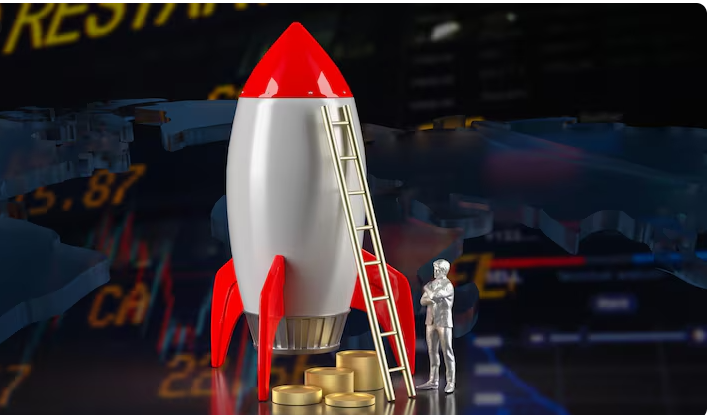
Whether SPCX will trade above or below its IPO price by December is still up in the air. It is quite probable that the stock will open much higher today and remain there. Perhaps it doesn’t. SpaceX is an amazing business. That does not mean that $135 is the appropriate amount to spend for it this morning.
