


When asked about the impending review of the Canada-U.S.-Mexico Agreement on a Wednesday in June 2026, Donald Trump made a statement that stunned Ottawa and trade ministries throughout the continent: “I’m not looking to renew it.” He went farther. “We don’t require anything that Canada possesses. Mexico needs everything we have, but we don’t need anything they have.”
Sixteen days prior to the July 1 deadline, when the three CUSMA parties must indicate whether they wish to subject to annual reviews or extend the agreement for an additional 16 years, the statement was given without any apparent ambiguity. When reporters asked Prime Minister Mark Carney directly on Parliament Hill, he refused to answer. The quiet was a sort of response in and of itself.
At a keynote speech in New York, Conservative Leader Pierre Poilievre and CTV pundit Tom Mulcair both said that Trump’s remarks were more of a negotiation stance than a genuine desire to sever ties with North America’s most integrated economic partners. The “we don’t need anything” narrative just doesn’t take into consideration the manner in which the American economy depends on what Canada offers. The Canadian Association of Petroleum Producers provides precise figures: in 2024, Canada exported $197 billion worth of energy to the United States. That is more than food, transportation equipment, metals and minerals, and forest products put together.
Because the pipeline infrastructure is located there and because there are still few other options, such as access to Asian markets or ways to tidewater, 95% of Canada’s oil exports go to American refineries. American refineries would have to find oil elsewhere at international market pricing if Canada ceased selling it to the United States at low costs. Canada sells energy at proximity-discounted prices instead of exporting it to the other side of the Pacific, which contributes significantly to the trade deficit that Trump constantly pointing to as an issue.
The claim that the United States does not require Canada is not what makes Trump’s particular phrasing intriguing. It’s the section in which he discussed the USMCA’s authority to terminate, which he genuinely adores. “NAFTA was the worst trade deal I’ve ever seen,” he claimed. “I improved it, but we were unable to end it under NAFTA. I adore what the USMCA accomplished. It is up for renewal after six years.
That rhetoric is not anti-trade. That’s how leverage is described. In 2018 and 2019, Trump renegotiated NAFTA into CUSMA in part by threatening to leave the agreement completely. This pressure allowed him to secure concessions on intellectual property rights, dairy market access, and automotive content regulations. According to this reading, the six-year review process he is currently using is a tool he created just for situations like these.
Given how reliant its export economy is on access to American markets, Canada’s response has been a combination of formal diplomacy and covert lobbying. Last week, Dominic LeBlanc delivered an official letter to U.S. Trade Representative Jamieson Greer announcing Canada’s plan to extend CUSMA and characterizing it as “highly beneficial to each of our countries and to the integrated North American economy.”
Doug Ford pushed a “Fortress North America” framework that prioritizes mutual reliance over bilateral deficits during his two days in Washington, D.C., meeting with representatives of the automotive sector and the American Farm Bureau Federation. The amount of effort Canada is putting in to maintain a deal that Trump is openly treating as optional is difficult to ignore.
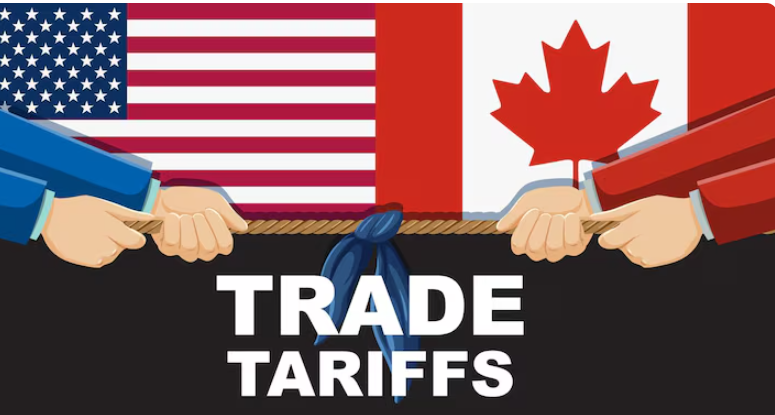
The deadline of July 1st is actual. It’s a true mechanism. It is still really uncertain whether Trump exploits the deadline as the last pressure point in a negotiation that ultimately extends the agreement—possibly with Canadian concessions on energy price or dairy—or follows the rhetoric to a non-renewal decision. It is evident that the United States’ $12 billion annual trade deficit with Canada serves as political justification for a stance that, if it became official policy, would have an impact on businesses on both sides of a border that has been functionally integrated for thirty years.
