


A number that has a weight completely out of proportion to what it actually measures flashes on television screens, phone notifications, and brokerage apps every weekday afternoon at approximately 4 PM Eastern Time. The Dow Jones Industrial Average. Thirty businesses. Price-weighted, meaning that regardless of which company is bigger or more important to the economy, a stock trading at $400 per share affects the index about eight times more than one trading at $50.
This approach was created in 1896, when Charles Dow was attempting to make sense of an economy devoid of computers, ETFs, derivatives, and the notion of market capitalization. Nevertheless, 130 years later, the Dow remains the figure that is mentioned on the evening news and that people refer to when they inquire about “how did the market do today.” Every serious economist will go into great detail about its flaws. Additionally, it is effective in that it reflects investor sentiment, changes with the economy, and has become ingrained in the way Americans view their financial lives.
The last week demonstrated the index’s unusual durability as well as its sensitivity. A single day of euphoria on Tuesday following the announcement of a two-week ceasefire in the U.S.-Iran conflict nearly entirely drove the DJIA’s 3% gain, one of its best weekly performances since November 2025. The majority of the weekly gain came from that one session, which was the Dow’s best single-day gain in months.
| Dow Jones Industrial Average — Key Information | |
|---|---|
| Full Name | Dow Jones Industrial Average (DJIA) |
| Ticker Symbol | ^DJI |
| Founded | 1896 — by Charles Dow and Edward Jones |
| Number of Components | 30 large U.S. blue-chip companies |
| Weighting Methodology | Price-weighted — higher-priced stocks have more index influence regardless of market cap |
| Recent Close (April 10, 2026) | 47,916.57 — down 269.23 points (-0.56%) |
| 52-Week High | 50,512.79 |
| 52-Week Low | 37,830.66 |
| Weekly Performance (April 7–10, 2026) | +~3% — best weekly gain since November |
| Key Drag on Friday (April 10) | Verizon (-3.62%), Salesforce (-3.43%), Nike (-3.14%) |
| Key Gainer on Friday | Nvidia (+2.58%), Amazon (+2.05%) |
| CPI Data (March 2026) | +3.3% year-over-year — highest since May 2024; energy up 10.9% |
| University of Michigan Consumer Sentiment (April 2026) | 47.6 — potential record low |
| Oil Price (WTI, April 10) | ~$99/barrel — war premium holding above $100 at times |
| Key Macro Risk | U.S.-Iran conflict; Strait of Hormuz blockade; failed weekend peace talks |
| Fed Funds Rate | 3.5%–3.75% — one cut projected for 2026 |
| Reference | Yahoo Finance — DJIA |
The other days saw some of that gain being lost. As ceasefire optimism faded into something more cautious, the index closed Friday at 47,916, down 269 points for the day. Hezbollah, a group supported by Iran, and Israel traded strikes in Lebanon overnight on Thursday. These strikes violated the terms of the ceasefire, according to Iran’s parliamentary speaker. Vice President Vance left for weekend peace negotiations in Islamabad. By Friday, traders who had embraced the optimism on Tuesday were cutting back.
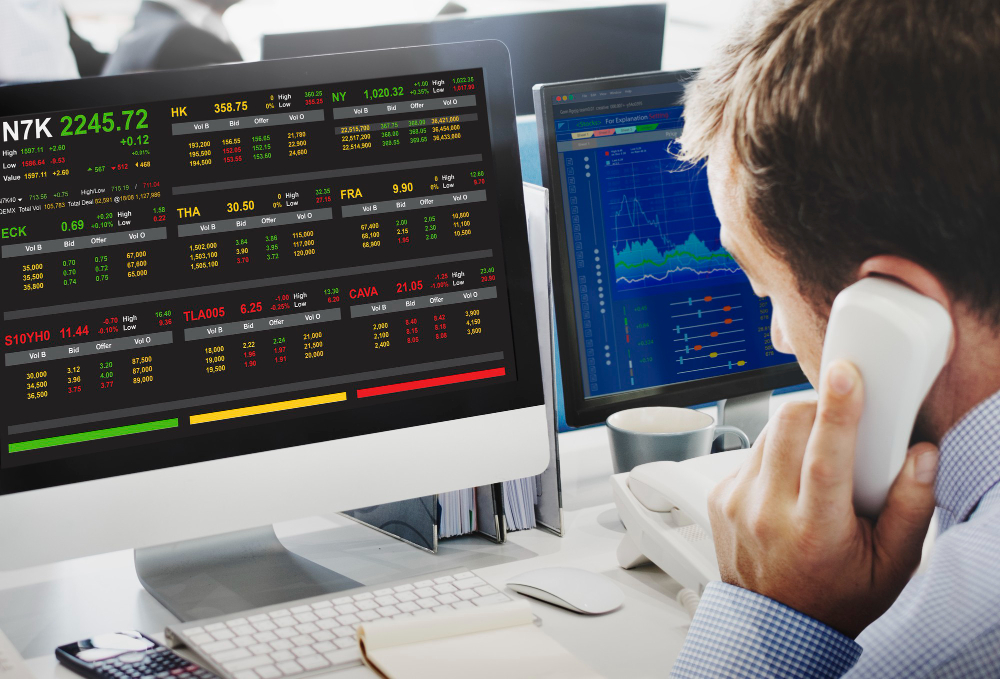
Beneath all of this geopolitical turbulence is unsettling economic data. The March CPI was 3.3% year over year, which was exactly what was predicted and gave some short-term relief that it wasn’t worse. However, the figure is still significantly higher than the Federal Reserve’s 2% target and continues to rise. Due to the disruption of the Strait of Hormuz, which has kept oil prices close to or above $100 per barrel since the conflict started in late February, energy costs increased by 10.9% in March.
The Fed may be able to overlook the energy shock if the conflict is resolved, according to some analysts, since core inflation, which excludes food and energy, came in at 2.6%, slightly lower than anticipated. Although that is a weak and conditional argument, the market is currently choosing to accept it. The March dot plot predicted only one rate cut in 2026, and the Fed’s benchmark rate is currently between 3.5% and 3.75%. Unless the underlying data allows it to change, that trajectory remains unchanged.
The University of Michigan’s initial consumer sentiment score for April, which was made public on Friday, was 47.6. If that figure holds true, it would be the lowest reading ever recorded in the survey’s history, surpassing even the 2022 inflationary period and the peaks of pandemic anxiety. Long-term inflation expectations increased slightly to 3.4%, while one-year inflation expectations surged to 4.8%, the largest monthly increase since April of last year. The timing of the survey is important because 98% of the responses were gathered prior to the announcement of the ceasefire, so if the agreement is upheld, the next reading should show some relief. However, the $4.30 per gallon price of gasoline and the general perception that things are more costly and unpredictable than they were six months ago are already indicators of the harm done to household confidence.
The macro tension of 2026 can be seen in miniature when examining the Dow’s component-level performance. Oil prices above $100 theoretically benefit producers but put pressure on manufacturers with global supply chains. Energy and industrial names are caught between conflicting forces. Relatively speaking, defensive brands like Coca-Cola and Procter & Gamble have quietly outperformed, taking in investor funds that would have otherwise gone to growth stocks. Salesforce and Verizon led Friday’s declines, each for a different reason: telecom is under pressure to increase capital expenditures, while cloud software is concerned about the slowdown in the economy. As a reminder that the index covers a genuinely broad range of economic exposures and doesn’t tell a single story, Nvidia, which is now officially a Dow component, added 2.58% on the same day.
The first-quarter results from JPMorgan, Goldman Sachs, and other banks will be released next week, providing the first comprehensive look at how the financial industry handled the most turbulent time for international markets since the pandemic. The main factor is still the Iran peace negotiations in Islamabad, which failed over the weekend and sent futures sharply lower on Sunday night. Following the collapse of the negotiations, the U.S. Navy announced a blockade of Iranian ports, which drove oil back above $100 and caused Dow futures to fall more than 1% prior to Monday’s opening. It’s difficult to ignore the fact that the index’s daily range has become nearly totally dependent on the timing of the geopolitical news cycle; it rallies on reports of a ceasefire, retreats on contradictory statements, and oscillates in between.
All of this will be absorbed by the Dow, just as it has absorbed every financial crisis, pandemic, recession, and war since 1896. At 4 PM, the number will continue to show up on screens. People will continue to inquire about its meaning. In April 2026, the truth is that it means exactly what it has always meant: a rough estimate of how the biggest American corporations are collectively weathering the moment, imperfect, price-weighted, and strangely resilient, performing its imprecise job with a consistency that nothing more sophisticated has been able to replace.
