


Walk through the industrial corridors of the Ruhr Valley today and something feels off. The cranes are still standing. The chimneys are still there. But the rhythm has changed — slower, quieter, with more pauses than any manager would prefer. Germany’s manufacturing sector, the mechanical spine of the European economy for well over a century, is grinding through something that looks increasingly like a structural crisis rather than a cyclical dip.
The numbers are stark. Through December 2025, 248,000 jobs had been lost across Germany’s key industrial sectors — motor vehicles, machinery, electrical equipment, electronics, fabricated metals, and chemicals. These weren’t fringe industries or legacy businesses past their prime. They were the crown jewels, the export engine, the workshops that allowed Germany to run persistent trade surpluses when the rest of Europe was borrowing to stay afloat. The automotive sector alone shed 111,000 workers, accounting for roughly 13 percent of the entire sector’s workforce. Those aren’t abstract statistics. Those are assembly lines that went dark.
The proximate cause, at least the one everyone keeps returning to, is energy. According to a DIHK survey of more than 3,000 German companies, 51 percent of businesses with at least 500 employees are either considering or actively planning to move operations out of Germany. When that many companies are holding that conversation internally, something has broken down. Germany remains stuck in recession, having registered negative GDP growth for five consecutive quarters, with GDP falling 0.2 percent in 2024 — extending the contraction from 2023. Europe’s largest economy, contracting. It’s still hard to fully absorb.
The energy cost gap between Germany and its global competitors is not marginal — it’s severe. German industrial firms pay around 20 euro cents per kilowatt-hour for electricity. In the United States, the comparable figure sits closer to 7 or 8 cents. That’s not a policy wrinkle. That’s a structural disadvantage baked into every production decision, every investment model, every conversation a CFO has about whether to expand in Düsseldorf or shift capacity to Texas. The math is not ambiguous, and boardrooms across the country have been running it for years.
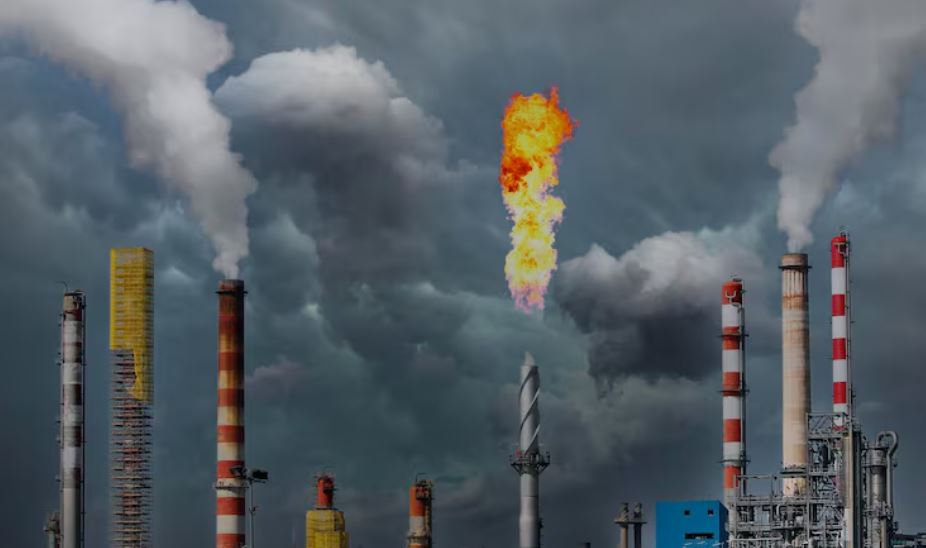
The roots of the crisis trace back further than the war in Ukraine, though that conflict poured fuel on a fire already smoldering. For decades, Germany built its industrial model partly around cheap Russian natural gas — a reliable, affordable feedstock that allowed energy-intensive sectors like chemicals and steel to maintain their global edge. The sudden loss of inexpensive Russian gas delivered a severe blow to its energy-intensive industries and threatened the country’s standing as Europe’s manufacturing powerhouse. What followed was a frantic and expensive scramble for alternatives — LNG shipped from the United States, power drawn from a grid being rapidly restructured around renewables — none of which came close to matching the old price point.
The chemicals industry tells the story with particular clarity. In Germany, chemicals and chemical products account for 37 percent of total industrial natural gas usage, and gas isn’t just fuel in that sector — it’s feedstock, raw material, the molecular building block of products that feed into supply chains across the continent. BASF, long a symbol of German industrial ingenuity, has been closing production lines in Germany for several years now. It’s possible the company hasn’t given up on the country entirely, but the direction of travel is difficult to misread.
Siegfried Russwurm, president of the Federation of German Industries, has warned that without decisive countermeasures, Germany faces a scenario of creeping de-industrialization — energy-intensive sectors gradually moving production elsewhere, the automotive industry losing ground in the electric vehicle market, and German companies falling behind in future technologies. Creeping is perhaps the operative word. This isn’t a dramatic collapse. It’s a slow hollowing out, a loss of industrial mass that compounds over years and becomes very difficult to reverse once it reaches a certain threshold.
There’s a geographic dimension to this that complicates any simple solution. European wholesale energy prices are likely to stabilize at levels substantially higher than pre-crisis prices, even as the immediate shock fades. Studies suggest that regions with abundant renewable resources — sunny Iberia, wind-swept Scandinavia — will have inherently cheaper electricity in an electrified industrial future, giving them a structural advantage that Germany, sitting in the middle of the continent, cannot replicate simply through policy choices. The last EU hydrogen production auction awarded its funds almost entirely to projects in Spain, Portugal, Norway, and Finland. Not a single German applicant succeeded.
The German government is aware of the bind. The new coalition under Chancellor Friedrich Merz is reportedly preparing relief measures that would cut industrial electricity prices by five cents per kilowatt-hour through reduced taxes and grid fees. Whether that’s enough to change the calculus for companies weighing relocation remains genuinely unclear. Five cents helps. It doesn’t close a twelve-cent gap with the United States. There’s a sense, watching all this unfold, that Germany is fighting a real battle with slightly inadequate tools, hoping the situation stabilizes before it metastasizes into something irreversible. That may be an optimistic read. It may also be the only one left.
