

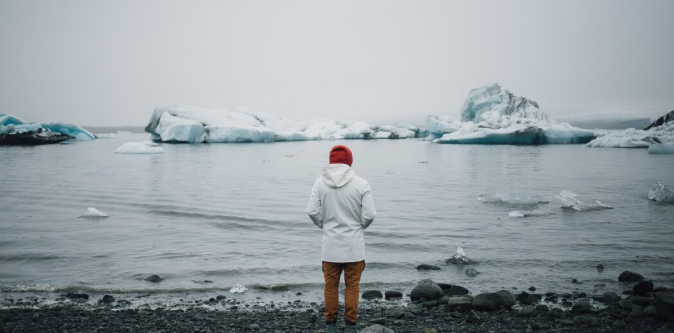

The images from Crary Ice Rise appear almost too perfect: a drill rig, a few tents, a flat white horizon, and people wearing red parkas that resemble moving punctuation marks on the ice. The team accomplished something that still seems a little surreal beneath that placid surface: they melted a hole through 523 meters of ice and then extracted a 228-meter column of old rock and mud, the longest sediment core ever drilled from beneath an ice sheet.
Because it is layered rather than poetic, it reads like a climate diary. Each band represents the conditions that once prevailed where there is now only ice and wind—mud after mud, gravel after gravel. There is a certain weight to the preliminary dating that is being discussed, which is about 23 million years old. That period encompasses times when the Earth was warmer than it is today, which is precisely the unsettling analogy that scientists are attempting to highlight.
| Item | Details |
|---|---|
| What was recovered | A 228-meter (about 748-foot) sediment core of mud and rock drilled from beneath Antarctic ice—the longest ever retrieved from under an ice sheet. |
| Project | SWAIS2C (Sensitivity of the West Antarctic Ice Sheet to 2°C). |
| Where | Crary Ice Rise, a remote site near the margin of the West Antarctic Ice Sheet and the Ross Ice Shelf, roughly 700 km from the nearest stations (as described by participating institutions). |
| How deep | The team drilled through 523 meters of ice before coring the sediments below. |
| Time window hinted | Preliminary evidence (including microfossils/shell material discussed in coverage) suggests the core may span ~23 million years. |
| Why it matters | The record may help constrain how the West Antarctic Ice Sheet responded during past warm periods—useful for estimating future sea-level risk under warming. |
| Authentic reference | SWAIS2C project update: https://swais2c.aq/media/record-breaking-sediment-core-provides-unprecedented-evidence-of-west-antarctic-ice-sheet-retreat |
There is a geophysical somewhere and a geopolitical nowhere for Crary Ice Rise. It is situated close to the border between the Ross Ice Shelf system and the West Antarctic Ice Sheet, making it remote—according to the institutions involved, hundreds of kilometers from major Antarctic stations. That geography is important because, as oceans warm and ice dynamics shift, stability may start to appear negotiable along these margins.
There is a feeling that the researchers are aware that the core is not a single “answer.” They are working with a system that is full of feedbacks, thresholds, and delayed reactions—ice that can remain solid for a long time before beginning to slip in a way that seems abrupt to people.
West Antarctica is losing mass, according to satellite observations, but the debate has always focused on sensitivity—how much warming and for how long—pushes the region into a new state. SWAIS2C was created specifically to address the potential effects of a world with temperatures above 2°C on ice and oceans.
The tiny physical evidence that appears in the mud is what makes the story difficult to ignore. Shell fragments and marine indicators are noted in the coverage of the recovered sediments. These indicate that this area may have once been open ocean, receiving light and supporting marine life, acting more like a coastline than an interior ice world. A “beach-like” layer beneath today’s ice, suggesting water and air where none currently exist, is the image that keeps coming to mind rather than a major disaster.
Cores can be overly romanticized and treated like holy texts. They’re not. Microfossils must be identified, isotopes must be measured, grains must be examined, and dates must be meticulously tightened until “millions of years” are transformed into a timeline with real contours. Because climate history is never a single plot line, there will still be uncertainty even at that point. However, the very fact that this core originates from beneath the ice sheet rather than from its edges or from offshore deposits that need further deduction makes it exceptionally valuable.
Additionally, there is the human element, which is rarely preserved in the formal language of journal articles. Participating groups’ reports detail multiple attempts and challenging logistics, with success coming on a subsequent attempt—an accomplishment that sounds as much like engineering stubbornness as science. You can imagine the drill team handling three-meter sections as they come up, taking pictures, labeling, and attempting to avoid letting fatigue lead to mistakes while working in a tent that has a slight fuel and damp gear odor.
Sea level is the larger meaning that lurks, uninvited, behind every detail. Although no sane person asserts that the West Antarctic Ice Sheet “predicts” a specific amount for 2100, it does help anchor the models in reality. The West Antarctic Ice Sheet contains enough ice to raise the world’s seas by meters if it were completely lost. The quiet power here is that grounding, which, at least in some historical contexts, transforms arguments about “could” into arguments about “did.”
One persistent discomfort still exists, though. People occasionally believe that the past will provide a tidy analogy for the present when they hear the phrase “23 million years.” It won’t. The carbon pulse of today is rapid, and the way that oceans heat ice shelves has peculiarities of its own. Whether the most terrifying future routes will resemble any one slice within that core is still up in the air. However, if you see the same character repeatedly making the same mistake, even a flawed diary can influence your behavior.
And that might be the true change: the core does more than merely impart information. It adds a type of memory that is inconvenient, testable, and physical, drawn from a location that is reluctant to reveal its secrets. It is more difficult to dismiss collapse talk as mere conjecture after seeing proof that West Antarctica has previously retreated, leaving marine traces where ice now rests. People are still reading the story. However, it already feels like a warning in mud from the first few pages.
