

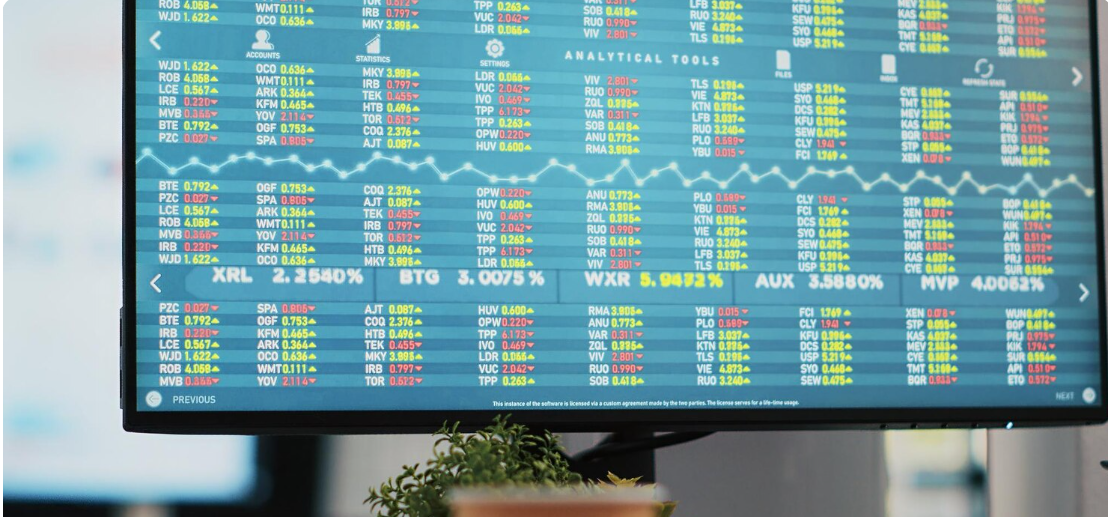

When markets are open on a muggy afternoon in Hong Kong’s Central district, there is a certain tension. Inside brokerage offices, screens glow as traders dash between terminals, looking at numbers that fluctuate every few seconds. The Hang Seng Index, which subtly gauges the mood of one of Asia’s most intricate financial hubs, is situated in the center of that dynamic environment.
When the Hang Seng Index was first released in 1969, it was intended to serve as a sort of regional response to the US Dow Jones Industrial Average. According to reports, Ho Sin Hang, the founding chairman of Hang Seng Bank, came up with the concept. Cargo ships, textile factories, and an increasingly self-assured banking industry were all part of Hong Kong’s rapidly growing economy at the time. The heartbeat of the market needed to be summarized. In the mid-1960s, Stanley Kwan, the bank’s head of research at the time, developed the framework initially for internal use. It wasn’t made public until much later.
| Category | Details |
|---|---|
| Index Name | Hang Seng Index (HSI) |
| Founded | November 24, 1969 |
| Founder Concept | Ho Sin Hang |
| Developed By | Stanley Kwan |
| Managed By | Hang Seng Indexes Company Limited |
| Exchange | Hong Kong Stock Exchange |
| Constituents | 88 major companies |
| Market Coverage | ~58% of Hong Kong market capitalization |
| Parent Institution | Hang Seng Bank (subsidiary of HSBC Holdings) |
| Major Companies in Index | Tencent, Alibaba, Xiaomi, Meituan, JD.com |
| Reference Website | https://www.hsi.com.hk |
Currently, 88 of the biggest companies listed on the Hong Kong Stock Exchange are included in the index. When combined, they make up about 58% of the exchange’s total market value. Just that figure suggests the impact of the index. People in trading rooms throughout Asia take notice when the Hang Seng moves abruptly.
However, tracking the index over time is similar to reading a Hong Kong diary. The deeper narrative lies behind the fluctuating numbers. Recently, during midday trading, the Hang Seng was hovering around 25,700 points on one screen. The market was being driven higher by technology companies. Tencent ascended. Xiaomi soared, while JD.com and Alibaba also saw slight increases. On the surface, the movement appeared nearly serene, but the underlying forces were anything but straightforward.
Global investors seem to be attempting to define Hong Kong in the context of contemporary finance. Some people are still wary because they recall the sharp fluctuations of the past. In 2018, the index hit a record closing high of 33,223 points. The turbulence then appeared. The market’s confidence was impacted by trade tensions, political unpredictability, and pandemic disruptions.
It’s difficult to ignore how quickly sentiment changes here when passing a window on the trading floor. In a matter of seconds, a single rumor concerning interest rates or geopolitical tensions can spread across screens. The Hang Seng represents belief, fear, and occasionally obstinate optimism in addition to business profits.
History demonstrates how extreme those fluctuations can be. In July 1964, the index began with a base value of 100 points based on market conditions. Over the years, it surpassed previously unattainable benchmarks: 10,000 points in 1993, 20,000 in 2006, and ultimately over 30,000 in 2007 during the worldwide liquidity boom. Although that ascent was thrilling at the time, seasoned investors who had witnessed cycles before expressed mild skepticism.
They weren’t misguided doubts. Thousands of points were lost in the ensuing financial crisis. The index had dropped more than 50% from its peak at one point in 2008. Anyone who stood close to a trading desk during those months can recall the atmosphere: phones ringing nonstop, traders speaking in short, clipped sentences, and the clear sense that the confidence of the market had crumbled.
Nevertheless, the Hang Seng has consistently demonstrated the capacity to bounce back, frequently in surprising ways. The index has relied significantly on tech companies in recent years. Companies like Tencent, Alibaba, and Meituan are now key pillars of the benchmark. Their impact is a reflection of how the economies of China and Asia are changing, with digital platforms now controlling trade, entertainment, and logistics.
The volatility of the index may be partially explained by this concentration on technology. Hong Kong frequently rises in tandem with improvements in global tech sentiment. The pullback can happen just as quickly when skepticism emerges.
The market is undervalued, according to some investors. Michael Burry, a hedge fund manager, recently proposed that valuation compression rather than declining profits may be the primary cause of the decline in Hong Kong tech stocks. Put another way, it’s possible that businesses are still expanding while investors are just less certain of their value. Analysts have been quietly discussing that theory, which has raised both curiosity and eyebrows.
The index is still changing in the interim. As industries evolve, new businesses join the benchmark. The biotech company Insilico Medicine is one recent example; it became a part of the Hang Seng Composite Index ecosystem and was able to access international investment through the Stock Connect program. Such actions suggest that biotech, artificial intelligence, and cutting-edge research will be incorporated into the financial narrative in the next chapter of Hong Kong’s market story.
It’s simple to forget that the Hang Seng Index is more than just a list of companies when you stand outside the Hong Kong Exchange building in Central and observe tourists taking pictures next to the bronze bull statue. It reflects the city’s aspirations, fears, and unwavering fortitude.
It’s unclear where the index will go next. Rarely do markets adhere to well-written scripts. However, the Hang Seng continues to carry the pulse of an unstoppable financial metropolis, ticking silently across screens all over the world.
