


In front of a group of foreign delegates, aerospace contractors, and members of Congress at NASA’s Washington headquarters on the morning of March 24, with the Space Launch System rocket resting on Pad 39B at Kennedy Space Center and a crewed lunar mission just one week away, NASA Administrator Jared Isaacman announced, in so many words, that the plan had changed. Once more. The Lunar Gateway, a space station that took years to develop, was only partially built, and had the support of international partners on three continents, was being put on hold. Technically, it wasn’t cancelled. paused. It’s not as important as it might seem.
The goal of Gateway was to serve as the glue for America’s moon landing. It would be a hub for operations in deeper space and a waypoint for landers descending to the surface. It would be a small orbital outpost in a nearly rectilinear halo orbit. The European Space Agency, Canada, and Japan had all made contributions to the project. Lanteris Space Systems, a subsidiary of Intuitive Machines and Northrop Grumman, had previously produced significant hardware. The station was no longer just an idea. It was a tangible object with no obvious future, in a real and somewhat awkward sense. In a press conference, repurposing it for surface systems sounds sophisticated. It’s still genuinely unclear what it means for the foreign partners who built parts of it, and it would be shocking if those discussions weren’t far more complex than Isaacman’s comforting language implied.
| Topic Overview: NASA Lunar Gateway Pause & Moon Base Plan | Details |
|---|---|
| Announcement Date | March 24, 2026 — NASA Ignition Event, Washington D.C. headquarters |
| NASA Administrator | Jared Isaacman — appointed by President Donald Trump, took charge December 2025 |
| Gateway Status | Officially “paused” — hardware to be repurposed for lunar surface base |
| Estimated Moon Base Cost | $20 billion — replacing orbital Gateway station with permanent surface infrastructure |
| Gateway Contractors (Already Built) | Northrop Grumman and Intuitive Machines subsidiary Lanteris Space Systems |
| International Partners Affected | Japan, Canada, European Space Agency — had agreed to provide Gateway components |
| Moon Base Phases | Phase 1: Robotic landers/rovers via CLPS; Phase 2: Semi-habitable crewed infrastructure; Phase 3: Heavy long-term habitat systems |
| Artemis 2 Launch Window | April 1, 2026 — first crewed Artemis mission; 10-day lunar flyby with 4 astronauts |
| Artemis 4 Target (First Landing) | 2028 — no longer including Gateway rendezvous |
| Nuclear Mars Mission | Space Reactor 1 Freedom — nuclear electric propulsion spacecraft targeting Mars before end of 2028 |
| China’s Lunar Target | Crewed Moon landing approximately 2030 — cited by NASA as geopolitical driver |
| Crewed Landing Cadence Goal | Every six months following Artemis V, currently planned for 2028 |
It wasn’t totally unexpected to decide to abandon Gateway in favor of a $20 billion permanent base on the moon. Gateway was listed as one of the programs that would be cut when the Trump administration unveiled its proposed budget cuts in May 2025. Anyone who looked closely could see the writing. The speed and scope of the pivot, along with the concurrent announcement of plans to launch Space Reactor 1 Freedom, a nuclear-powered spacecraft, to Mars before the end of 2028, are what make the March announcement noteworthy. That isn’t a small change to an already-running program. In just one afternoon, about seven days before the first crewed Artemis mission was scheduled to launch, that represents a complete overhaul of American space priorities.
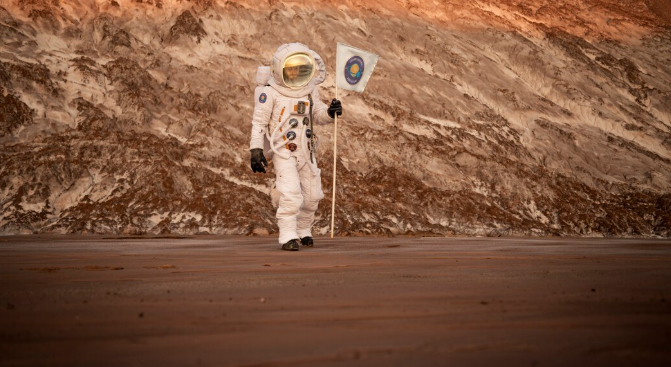
Orbital mechanics is the primary focus of the stated justification for Gateway’s abandonment. The high lunar orbit that Gateway was intended to occupy created significant fuel constraints for landers attempting to descend from the station to the surface and back. It is not irrational to make the efficiency case for avoiding the orbital middleman and going straight to the surface. More fuel margin for actual landing operations, fewer transfer points, and a simpler architecture. Isaacman used Apollo-era terminology to describe the entire transition, referencing the methodical process that landed Neil Armstrong on the regolith in 1969. That framing seems purposeful because it links a contentious programmatic reversal to one of the few space projects that everyone can agree was successful. The comparison’s validity will depend on how the upcoming years actually play out, which is still up in the air.
The aspect of all of this that is most likely closer to the real driver but is often treated as background context is the geopolitical aspect. By 2030, China plans to send people to the moon. Under Isaacman, NASA has pledged to beat them there before Trump’s current term ends. This ambitious schedule calls for completing the Artemis 4 lunar landing in 2028 and maintaining a crewed presence going forward. This might be possible. There’s also a chance that the intricacy of constructing real habitats on the lunar surface, setting up nuclear power plants, and managing a fleet of drones and robotic landers in a truly hostile environment will cause delays that cannot be overcome by political pressure. In addition to having a budget, a targeted mandate, and a nation that was closely monitoring it at all times, the Apollo program is renowned for operating on a sense of urgency. The goals are more expansive, the international relationships are more intricate, and the current environment is noisier.
Observing this, it seems as though the moon has evolved into a geopolitical scoreboard, something it wasn’t intended to be. The original space race had clear roots in the Cold War, so that’s nothing new. Regardless of its political roots, the Apollo program ultimately yielded real scientific benefits, a unique human accomplishment, and the kind of pictures that altered people’s perceptions of the planet they were on. It’s worth considering whether a hurried moon base constructed under time constraints using repurposed orbital station hardware and a contentious international partnership structure yields anything comparable.
At least in theory, NASA’s three-phase plan is organized as follows: commercial robotic missions through the CLPS program come first, then crewed surface operations with semi-habitable infrastructure, and finally heavier habitat systems like Canada’s Lunar Utility Vehicle and Italy’s Multi-purpose Habitats. The stated goal is to have crewed landings every six months following Artemis V. For a surface environment where dust, radiation, and temperature extremes test hardware in ways that ground testing can only partially replicate, that operational tempo is not insignificant. It is difficult to ignore the fact that even the most optimistic version of this timeline leaves very little room for the kinds of issues that complex space systems consistently generate.
Launching into this atmosphere, Artemis 2 is a 10-day crewed lunar flyby that will carry three NASA astronauts and one from the Canadian Space Agency. It is intended to be a systems check rather than a landing, threading the needle between an orbital station that has been canceled and a moon base that is currently mostly depicted in press releases and renderings. The rocket is prepared. The crew has received training. The destination is still the same. Only its surroundings have.
