


Just before a rocket takes off in French Guiana, a certain kind of silence descends upon a control room. Mid-sip, engineers freeze. Discussions end. Then another handful of satellites starts their ascent with a rumble that reaches you through the floor before your ears catch it. In locations like Kourou, Cape Canaveral, Baikonur, and a few new launch sites in India, the United Arab Emirates, and Turkey, this scene is now repeated nearly every week. Compared to a single launch, the cumulative effect is more difficult to observe. The economy down here is subtly rearranging itself around what’s going on up there as the sky fills up.
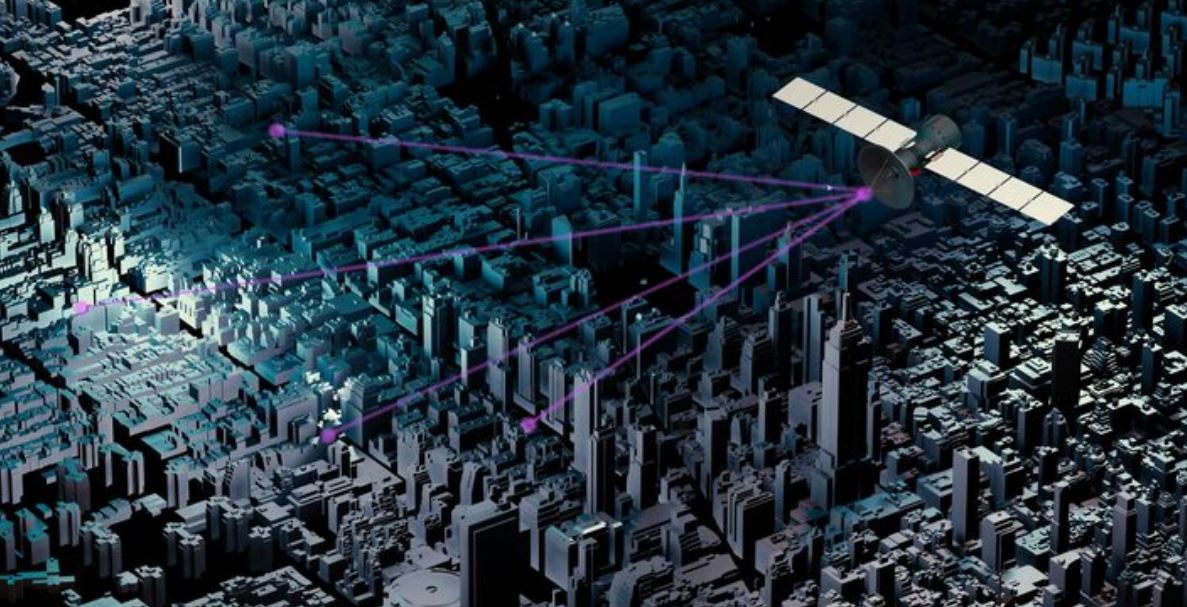
The majority of people associate satellites with abstract concepts like GPS and possibly Netflix via a dish. Already, that framing is extremely outdated. By 2035, the global space economy is expected to have grown from $613 billion in 2024 to $1.8 trillion. There are currently over 15,000 operational satellites in Earth’s orbit. Approximately 9,500 of them are on SpaceX’s Starlink alone. By the late 2030s, that figure might reach 500,000 if all of the suggested constellations are accepted. The economy has been rewired somewhere between those numbers and your day-to-day existence.
| Detail | Information |
|---|---|
| Global Space Economy (2024) | $613 Billion |
| Projected Value by 2035 | ~$1.8 Trillion |
| Active Satellites in Orbit (2026) | 15,000+ |
| Dominant Operator | SpaceX Starlink (~9,500 satellites) |
| Projected Satellite Count by Late 2030s | ~500,000 |
| Number of Countries with Space Programs | 70+ |
| LEO Investment (2025) | $45 Billion (up from ~$25B in 2024) |
| Key Governance Body | European Space Agency (ESA) |
| Submarine Cables (Earth Counterpart) | ~600 globally |
| Notable New Entrants | Amazon LEO (Kuiper), Eutelsat OneWeb, Blue Origin, China constellations |
| Potential GPS Outage Cost | ~$1 Billion per day (US economy) |
| Emerging Trend | Orbital AI data centers proposed by SpaceX & Nvidia |
Imagine an Iowa grain trader setting futures prices on Monday morning. Imagine the JFK terminal handling 400 arrivals per hour. Imagine a cardiologist in Nairobi using satellite broadband to retrieve a patient’s records because fiber hasn’t yet reached his clinic. Each of those moments is perched atop an imperceptible pile of orbital infrastructure. exact timing for financial transactions. weather information for insurance costs. navigation signals with a few-meter accuracy. The amount of direct economic damage caused by a U.S. GPS outage, even for a single day, would be close to $1 billion, demonstrating how demanding these systems have become.
It seems like we’ve created something enormous without fully completing the instructions as we watch this change take place. At a recent Davos panel, ESA director general Josef Aschbacher stated, “People don’t realize how dependent we are.” He wasn’t acting overly dramatic. Solar storms, cyberattacks, and space debris are no longer hypothetical. They pose a threat to the system that keeps airplanes in the air and markets in sync. Additionally, legal frameworks have not kept up. Every infrastructure era has historically been characterized by the industry moving more quickly than those attempting to regulate it.
Who is entering is the most fascinating aspect. SpaceX and a few legacy operators dominated the space discourse five years ago. Amazon’s Project Kuiper, which was just renamed Amazon LEO, is now launching its own constellation. By 2027, Blue Origin intends to have more than 5,000 satellites. France is strongly supporting Eutelsat’s OneWeb, which currently stands at about 600 and is still expanding, in an effort to challenge Musk’s hegemony. Plans for more than 200,000 satellites in 14 constellations have been submitted by China. At its 2026 GTC conference, Nvidia, of all companies, recently revealed a platform for orbital data centers. You can tell that the infrastructure conversation has shifted when chipmakers begin designing for vacuum.
Developing nations have also discovered something intriguing: you don’t have to be NASA to reap the benefits. Kenya used a university program to construct its first satellite. Amazônia One is used by Brazil to track deforestation. In 2024, Turkey introduced TÜRKSAT 6A and began renting capacity to nearby markets. Whether orbit turns into a truly level playing field or just another area where the early movers lock in advantage is still up for debate. However, the terminology associated with the frontier, such as “space race” and “final frontier,” seems more and more incorrect. This is no longer a frontier. It serves as a backbone. Furthermore, broken backbones are ineffective.
