

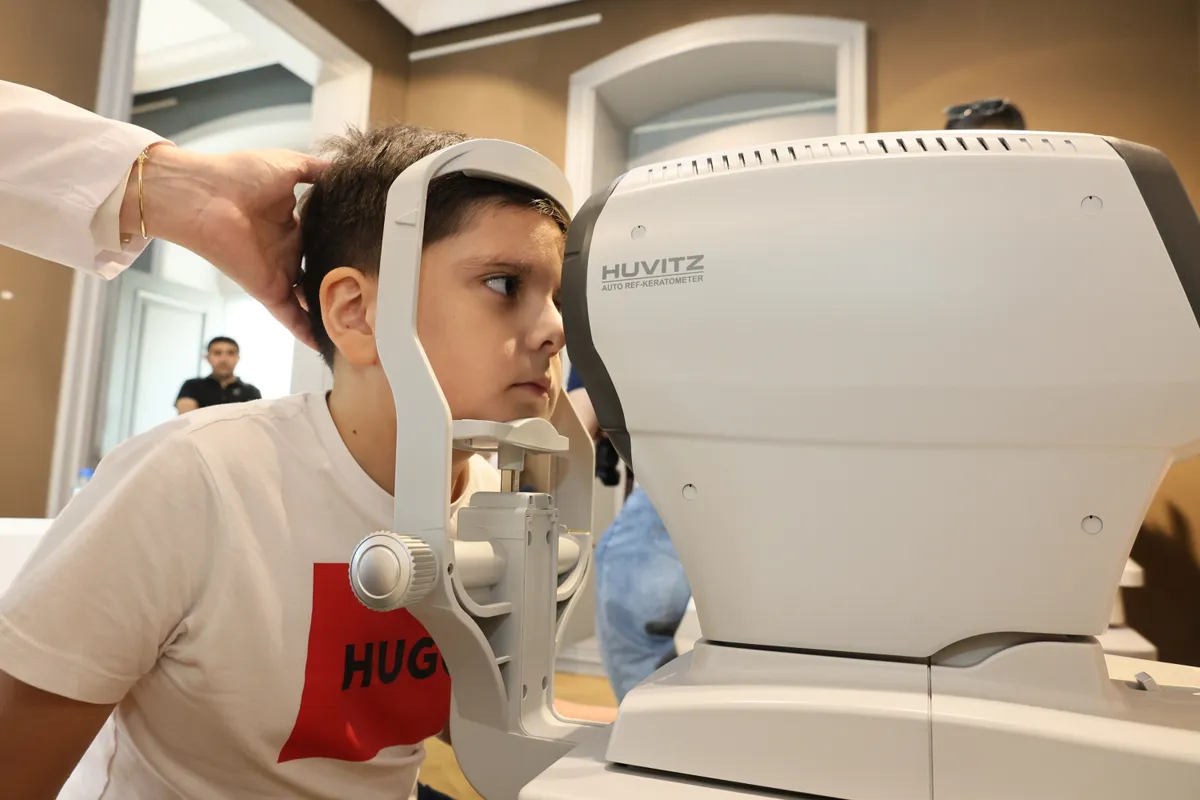

Autism evaluation wait times, which can stretch months or even years for families in many parts of the country, are the direct target of a new partnership between EarliPoint Health and Zest Pediatric Network, announced Monday. The two companies say the arrangement will let autism and ABA providers offer diagnostic testing in their own communities without needing a licensed diagnostician on-site.
| Detail | Value |
|---|---|
| EarliPoint device | FDA-cleared eye-tracking system (510(k) K243891) |
| FDA clearance age range | 16 months through 95 months (up to age 8) |
| Assessment duration | 12 minutes |
| Zest model | Concierge-style direct pediatric care, virtual evaluations |
| Partnership goal | Eliminate wait times, expand nationwide evaluation locations |
| Prior EarliPoint partnership | Netsmart EHR integration, announced April 2026 |
The Plan to Cut Autism Evaluation Wait Times
Under the arrangement, children can complete testing at a local EarliPoint Network site. A specially trained Zest pediatrician then reviews results virtually, at a reduced cost to families. The setup is designed for providers who already work in autism and ABA services but lack in-house diagnostic staff.
Zest describes itself as the nation’s first concierge-style direct pediatric care network, built around unhurried appointments and physician availability. Its pediatricians who conduct autism evaluations receive specialized training in virtual assessments using standardized tools. Multiple physicians review cases, which the company says gives families a broader clinical perspective on their child’s needs.
The problem the two companies are targeting is real and persistent. Families in many regions wait a year or more between raising developmental concerns and receiving a formal diagnosis, a gap that delays access to early intervention services. EarliPoint CEO Jamie Pagliaro framed the goal plainly: “No parent should be told to wait months or years when they have concerns about their child’s development.”
A Platform Built on Objective Technology
The EarliPoint System runs on the Tobii Eye Tracker 5L and Tobii’s software development kit, delivering a 12-minute assessment that measures how children visually attend to social and non-social stimuli. The brevity matters for throughput: a provider can run multiple evaluations in a single session without requiring a psychologist or developmental pediatrician present at the time of testing.
The FDA granted expanded 510(k) clearance (K243891) to EarliTec Diagnostics on March 26, 2025, covering the EarliPoint System for children ages 16 months through 95 months. That clearance sits under regulation 21 CFR 882.1491, the Class II category for Pediatric Autism Spectrum Disorder Diagnosis Aids. The expanded age ceiling, up from earlier versions of the system, broadens the pool of children who can be screened at community-based sites before a full clinical workup.
For ABA providers specifically, the business case is straightforward. Adding diagnostic capacity without hiring a full-time clinician reduces overhead while potentially shortening the pipeline from initial concern to treatment authorization.
Both Companies Have Been Building Toward This
This is not the first alliance for either party. In April 2026, EarliPoint announced a separate integration with Netsmart, a major provider of electronic health record software for autism and intellectual and developmental disability services, to embed the EarliPoint System directly into clinical workflows.
Zest has been similarly active. In July 2025 the network partnered with Attain-Kadiant to accelerate autism diagnoses, a deal that predates the EarliPoint arrangement by nearly a year. Zest has also moved into Medicaid territory: the network teamed with AmeriHealth Caritas Ohio to bring its concierge model to Medicaid patients in Northeast Ohio, a signal that the direct-care format is not limited to privately insured families.
Taken together, EarliPoint is building a network of community testing sites while simultaneously connecting them to EHR infrastructure and now to virtual physician review. The combination addresses the three main bottlenecks in autism diagnosis: physical access to testing, licensed clinician availability, and documentation that flows into treatment authorization.
The next visible test is how quickly the combined network scales. If autism evaluation wait times in existing EarliPoint markets drop measurably over the next 12 months, the model has a data story to bring to payers and health systems. If uptake is slow, the question will be whether virtual review by a pediatrician satisfies insurer and state requirements for a formal ASD diagnosis, which vary considerably by market.
