

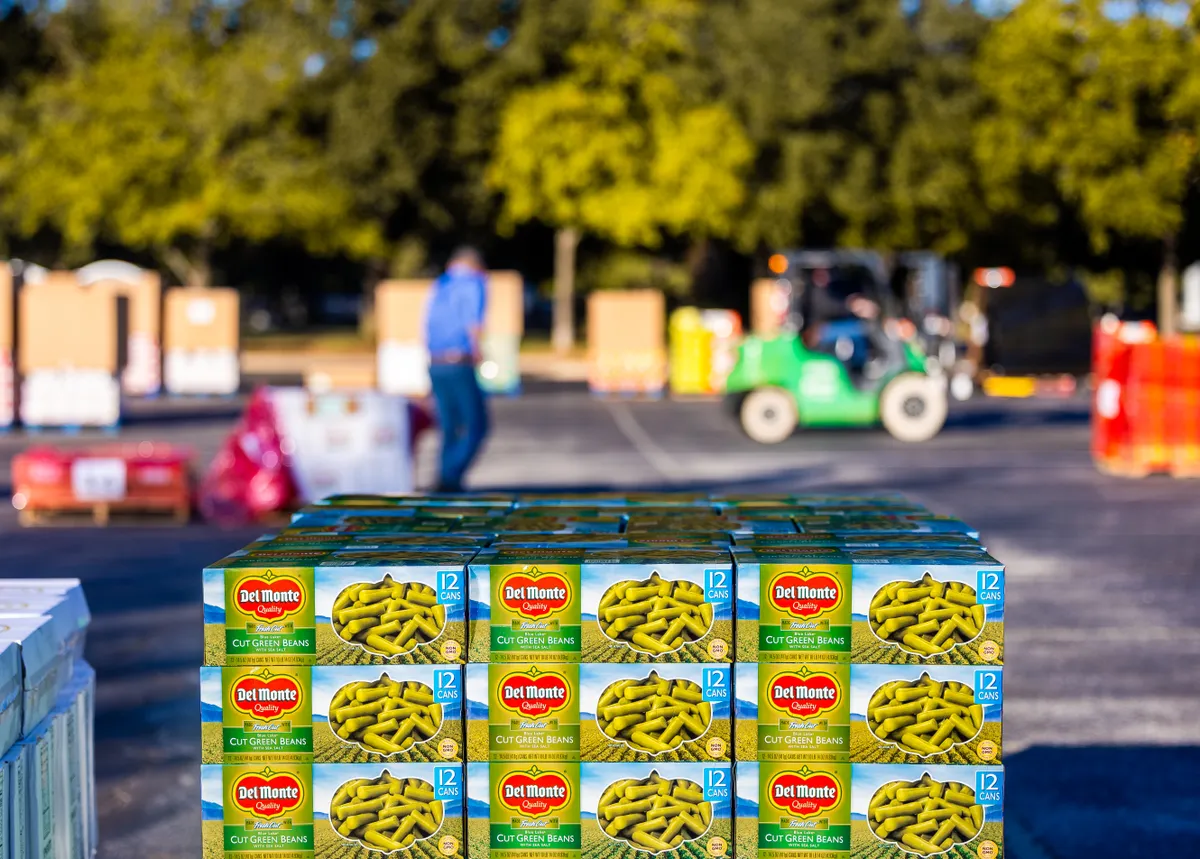

Sysco‘s World Cup inventory ramp is now fully in motion, with the food distribution giant adding millions of pounds of product across 11 U.S. host cities ahead of the 2026 FIFA World Cup, targeting close to 5 million expected visitors. The company says it has expanded its truck fleet, hired new warehouse and delivery staff, and worked alongside local officials to prep restaurant customers for an event it expects to reshape food service demand through the summer.
| Metric | Detail |
|---|---|
| Host cities covered | 11 U.S. cities |
| Overall inventory increase | About 5% across host cities |
| Extra French fries | 3 million pounds |
| Extra frozen chicken tenders | 500,000 pounds |
| Extra ground beef | About 255,000 pounds |
| Additional trucks/trailers secured | 80 |
What the Sysco World Cup Inventory Push Looks Like City by City
The headline numbers are familiar by now: 3 million extra pounds of French fries, 500,000 pounds of frozen chicken tenders, 255,000 pounds of ground beef, and about 10% more bottled water on average. But those figures reflect a system-wide average. In Houston, where Sysco is headquartered and where several World Cup matches are scheduled, the company is planning a 10% to 20% inventory increase from its local distribution center alone, a steeper build than the broader 5% figure, according to Houston Business Journal reporting on Sysco’s local preparations.
That distinction matters for anyone tracking whether the demand spike will actually move the needle for Sysco’s bottom line. A 5% inventory lift spread across a dozen metro areas is a logistics challenge. A 10% to 20% surge in a single hub city suggests some markets will feel this event much more acutely than a system-wide average implies.
Sysco also deployed dozens of warehouse selectors and delivery partners and secured 80 additional trucks and trailers to manage the volume. Sales teams worked with restaurant customers on specialized menus, point-of-sale technology suited to international guests, and novelties like soccer ball-shaped ice cubes.
The Economic Backdrop Behind the Sysco World Cup Inventory Bet
Sysco’s planning assumptions rest on a meaningful economic footprint for the tournament. The numbers from host city committees are large. The New York-New Jersey region alone projects $3.3 billion in economic impact, per an Economic Impact Summary from the NYNJ World Cup 2026 Host Committee, developed with Tourism Economics, an Oxford Economics company. Los Angeles County estimates up to $594 million in total economic impact from hosting eight matches, including roughly $35 million in additional local tax revenue and $22 million flowing to the State of California, according to the official LA host committee economic impact report by Micronomics.
Not all of that flows to food service, of course. Hotels, transportation, retail, and broadcasting all take a cut. But the restaurant and hospitality sector captures a meaningful share of tourist spending, which is exactly where Sysco sits in the supply chain.
For context, Sysco posted sales of more than $81 billion in fiscal year 2025, which ended June 28, 2025, serving approximately 730,000 customer locations across 339 distribution centers in 10 countries. The World Cup operation is a relatively small increment on that base. Still, incremental volume at scale matters.
What This Means for SYY Investors
Sysco’s fiscal year 2026 guidance, issued alongside its Q4 and full-year FY2025 earnings release, calls for sales growth of approximately 3% to 5%, targeting approximately $84 billion to $85 billion in total sales and adjusted EPS of approximately $4.50 to $4.60. The World Cup falls squarely in Sysco’s fiscal fourth quarter of 2026. Whether the tournament provides a meaningful beat to those figures depends on execution in the host cities and how closely actual visitor spending tracks the projections.
The Sysco World Cup inventory build is a real operational commitment: new hires, fleet additions, and product stocked months in advance. Those costs land regardless of whether restaurant traffic fully materializes. If visitor turnout hits the 5 million mark and those fans eat and drink at the volumes expected, the revenue lift should offset the prep costs comfortably. If attendance or spending disappoints, the margin math looks tighter.
SYY shares were little changed on Friday, trading near $79.65. The fiscal fourth quarter print, expected in late July or early August, will be the first real look at whether the World Cup translated into a tangible volume bump.
