


The first battery-grade material to be processed on African land and supplied into a supply chain intended for battery manufacturers in China and South Korea was produced in the first quarter of 2026 by a lithium sulphate plant outside of Harare, Zimbabwe. The factory is owned by the Chinese business Zhejiang Huayou Cobalt. Zimbabwe prohibited the export of raw minerals, which is why it exists.
This is a condensed version of what is happening throughout the continent: Chinese businesses are adapting more quickly than Western ones, African governments are refusing to stay at the bottom of the value chain, and the raw materials that will drive the global energy economy for the next thirty years are found in regions where, until recently, the political leverage to fully realize their value was mostly theoretical.
China’s stance on vital minerals in Africa extends beyond mine ownership. From early exploration funding to construction, offtake agreements, and the processing capacity that transforms raw spodumene or cobalt hydroxide into battery-grade material, Beijing has spent ten years establishing an integrated edge. In the first half of 2025 alone, Chinese policy banks disbursed $24.9 billion in mining loans related to the Belt and Road, a record pace even by previous norms, with a large portion of the money going to African lithium, cobalt, copper, and graphite.
Strategists at Rare Earth Exchanges refer to the DRC, Zimbabwe, Zambia, and Guinea as China’s “strategic anchors”; each is protected not only by mining investment but also by the port infrastructure, processing agreements, and financial ties that make switching suppliers structurally costly. Huayou Cobalt had begun laying concrete in Zimbabwe by the time Washington started considering African resources as a strategic priority.
Despite its sluggish speed, the American response has been genuine and deserving of serious consideration. In 2024, the US made an investment in the Lobito Railway Corridor, a transnational rail line that connects Zambia and the Democratic Republic of the Congo to Angolan Atlantic ports. The project’s goal is to enable inland resource transportation in a manner similar to what Chinese Belt and Road infrastructure has been accomplishing for years in East Africa.
After months of negotiations spurred by the M23 rebel occupation of Goma, the Washington Accords were formally signed in December 2025, exchanging formal access to DRC mineral resources for American security commitments. This transaction clarified what had previously been left to diplomatic implication. Launched in 2025 with support from the African Development Bank, the DRC-Zambia transboundary battery and EV special economic zone has the kind of on-continent processing ambition that both Washington and Brussels say they wish to facilitate.
aIn all of this, the issue of African agency gets the most emphasis in Lusaka, Kinshasa, and Harare, but the least attention in Western policy discussions. Since 2023, at least 14 African nations have imposed export restrictions on raw minerals. In 2025, Malawi outlawed the export of any raw minerals. To keep prices stable, the DRC temporarily banned the export of cobalt. In 2026, Zimbabwe expanded its prohibition on raw materials to include all minerals. Cobalt is worth $5.8 per kilogram when it comes out of the ground and $16.2 per kilogram after refining, according to CNBC Africa.
The pattern is intentional, an attempt to highlight the value multiplication that occurs between mine and battery. Every African export embargo is justified by this $10 disparity, which is stated in statistics rather than political rhetoric. Investment, technical capability, and the kind of regional coordination that the African Continental Free Trade Agreement and the AU’s Green Minerals Strategy are attempting to provide—but have not yet consistently delivered—will determine whether African governments are able to convert export restrictions into long-term processing industries.
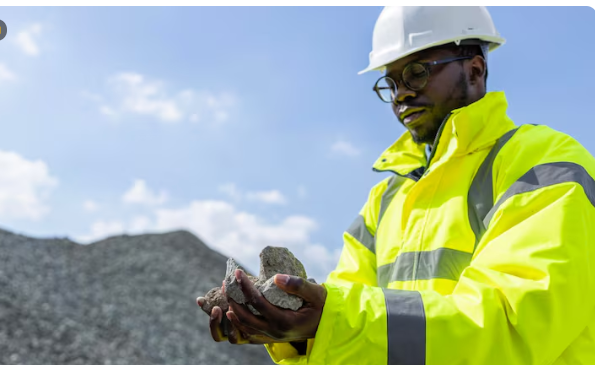
When seeing this competition from the outside in 2026, it seems as though the landscape is actually changing in ways that decades of foreign investment in Africa that was mostly focused on extraction failed to achieve. As one headline stated, the continent is not yet a mineral cartel in the sense of OPEC; rather, the individual governments are more split than unified, more negotiation-poor than resource-poor.
However, the movement’s direction is fairly obvious: it will lead to more on-continent processing, tougher negotiations with all foreign investors, regardless of nationality, and a time when the nations controlling the world’s most vital battery materials realize that their cards are worth more than they have historically been compensated for playing them.
