


On a weekday morning, sit at any coffee shop in a mid-sized American city and pay attention to what people are saying. Just the tone, not the actual content. People talk about supermarket prices, rent renewals, and job security in the same breath that they used to discuss weekend plans. This is a common register that has emerged in recent years, somewhere between worry and resignation. Don’t panic. Not really dramatic. Just a low-frequency, ongoing hum of financial anxiety that permeates everyday life and doesn’t seem to go away, regardless of what the week’s economic data indicates.
This is the vibecession, and job data are becoming less and less useful in explaining its psychological toll. The phrase, which was first used to characterize a time when public opinion remains extremely pessimistic despite macro measures that point to stability, entered the economic lexicon a few years ago and has persisted, in part because the phenomenon it refers to has persisted.
The rate of unemployment is low, or was. After peaking in 2022, inflation began to decline. GDP kept rising. However, the nation’s overall attitude hasn’t improved as much as it usually does when those figures start to improve. The disparity between the official narrative and the lived reality has become a source of stress on its own, and people suffer financial anxiety in ways that are not reflected in the headline data.
The findings becomes very disturbing when it comes to the cognitive aspect of persistent financial concern. The mental overhead of financial precarity functions similarly to enforced sleep deprivation, consuming cognitive resources that would otherwise be available for planning, decision-making, and emotional regulation, according to numerous studies looking at how chronic money worry affects brain function.
Researchers have used the term “scarcity trap” to characterize a situation where the mind is so preoccupied with the immediate issue of financial survival that it is less able to focus on anything else. Making long-term decisions gets more difficult. Impulse control deteriorates. The capacity to envision an alternative future, which is fundamentally what saving and planning demand, wanes. Lack of knowledge is not the reason why people in this state are making poor financial decisions. They are making them because the anxiety itself is consuming the brain capacity needed to make better decisions.
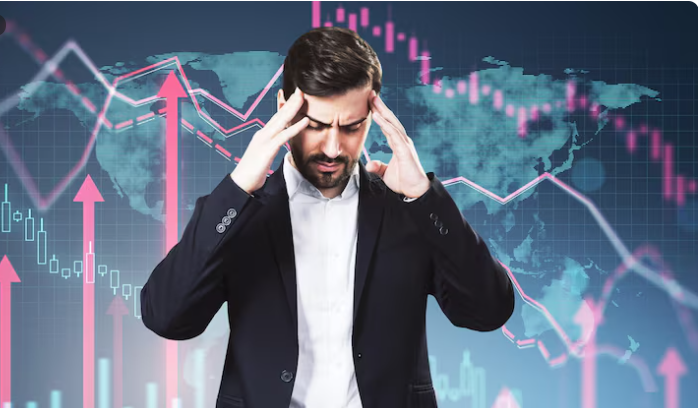
Clinicians can identify the typical patterns in which the physical symptoms follow the cognitive ones, which sufferers frequently fail to relate to their financial situation. persistent strain in the muscles. headaches that develop in the middle of the week for no apparent reason. digestive issues. Lying awake at two in the morning and performing the same calculations that didn’t work at midnight and won’t work at three is a sleep pattern. Persistent financial anxiety triggers the body’s threat response, which is meant for short-term, acute danger.
This response lasts for weeks or months instead of the minutes it was intended for, overloading the body with stress hormones. Over time, that persistent activation begins to feel more like the background state of everyday existence rather than a reaction to anything particular. The most pernicious aspect of it may be that normalization.
The gap between official promise and personal reality is the vibecession’s unique cruelty. Many people only hear a description of a rate of change rather than an absolute level when economists cite declining inflation as proof that things are getting better. The cost of groceries has decreased since its high in 2022. Additionally, they are far more costly now than they were in 2019, and many households’ wages were insufficient to cover the difference in the years between.
In the majority of large cities, housing prices continue to consume a disproportionate amount of take-home pay for both recent buyers and renters. Trust in the economic indicators itself has been damaged by the discrepancy between what the data indicates and how the kitchen table feels. This has led to a secondary concern about whether those assessing the situation are taking accurate measurements.
Reasserting some sort of agency in an uncontrollable circumstance is a prevalent theme among the interventions recommended by financial planners and mental health doctors for this particular type of chronic financial anxiety. The anxiety feedback cycle can be broken without requiring an immediate change in the real financial situation by intentionally limiting the consumption of financial news and social media, especially the doomscrolling loops that cycle through tariff headlines, market volatility updates, and wealth inequality comparisons.
Establishing even a little emergency fund, checking spending against a specific budget, and paying off a single high-interest loan are all important, but their immediate financial effects are less significant than their effects on the helplessness that first fuels anxiety. As a generation navigates very challenging economic circumstances, it’s tough to ignore the fact that finding a method to feel better about their finances isn’t the most helpful thing many people can do at the moment; rather, it’s finding a means to feel like they’re taking action.
