


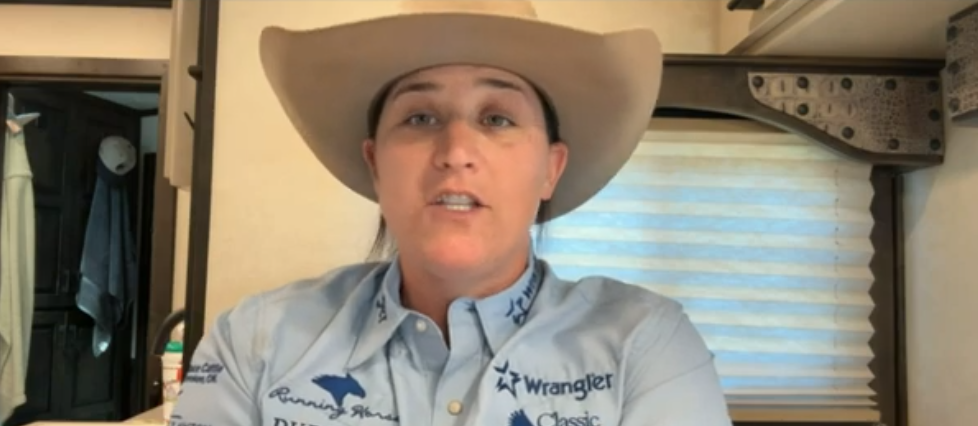
Credit: Premier Women’s Rodeor
Sometimes a niche sport feels like the focal point of the nation’s emotional map. A child’s name spreads more quickly than any scoreboard update, traveling from arena to arena via the same means that rodeo news is typically disseminated: by voice, text, or a person whispering, “Did you hear?” while leaning over a metal rail. This occurred following news that champion breakaway roper Kelsie Domer and her husband Ryan had lost their 3-year-old daughter, Oaklynn Rae Domer, on February 19, 2026.
In the days that followed, “Kelsie Domer daughter” turned into a direct search term that people use when they’re at a loss for words. There aren’t many publicly available facts, and that fact is important.
| Item | Details |
|---|---|
| Person | Kelsie Chace Domer |
| Profession | Breakaway roper; Women’s Professional Rodeo Association (WPRA) world champion |
| Family | Married to Ryan Domer; daughter Oaklynn Rae Domer |
| Child | Oaklynn Rae Domer (born Aug. 11, 2022; died Feb. 19, 2026) |
| Public reporting | Multiple outlets and rodeo community tributes describe a tragic horse-related accident; family has requested privacy |
| Services (publicly listed) | Funeral in Dublin, Texas; graveside service near Cherokee, Oklahoma |
| Memorial donations | Obituary lists donations to Rope Like A Girl Foundation for family expenses and scholarships in Oaklynn’s memory |
| Authentic reference | WPRA member bio for Kelsie Chace Domer: https://wpra.com/kelsie-chace-domer/ |
The rodeo community described a tragic horse accident, according to Taste of Country, which also noted that the family had requested privacy and had not made any detailed public statements. Her dates—August 11, 2022 to February 19, 2026—as well as the locations that influenced her brief life—which was centered in Texas but linked to a circuit that rarely stays the same—are confirmed in the obituary.
The rodeo industry has a unique way of fusing private and public spheres. Families can be found in the practice pen, the tack room, and the dusty area behind the chutes where children sleep on folded jackets—not behind velvet ropes. According to her obituary, Oaklynn loved frogs, horses, “yodeos,” and “everyone’s puppies.”
She also loved “hitting the practice pen with mom and dad” and “traveling the rodeo circuit all over the U.S.” If you have ever watched a parent balancing ropes, equipment, and a toddler’s inquisitive curiosity while standing close to an arena fence at dusk, those details make more sense.
Roping families often discuss work ethic in the same way that people discuss weather, so Kelsie Domer’s story has always been presented as a talent based on repetition and family culture.
Since family and career are blurred in this world, the WPRA member bio includes her husband Ryan and their daughter Oaklynn Rae (born August 2022) in one neat paragraph. One of the subtly cruel aspects of public profiles is that they present life as it is, while real life is constantly changing. That bio reads like a snapshot from a more tranquil era.
Following Oaklynn’s passing, the customs of support started to manifest in the ways that this community is most familiar with. Arenas are reportedly filling with pink as a tribute, a color that becomes a visible shorthand for grief when words are insufficient. This story has been repeated in coverage and social media posts.
It’s easy to imagine: a line of competitors in a vibrant array of colors against tan dirt, the loudspeaker abruptly becoming quieter, and the typical event clatter being replaced by a sort of held breath. Rodeo grief often resembles a family get-together that just so happens to take place in a stadium, despite the fact that sports are frequently accused of being performative.
Given how young Oaklynn was and how completely she appears to have been assimilated into a life on the road, the loss feels particularly acute. She “did not know a stranger and lit up the room,” according to the obituary, which may seem like a typical remembrance until you realize that it’s about a child who had just begun to speak in complete sentences. That kind of brightness is frequently regarded as its own kind of strength, something that should be protected in a society that values toughness.
It’s also important to honor the caution of those involved in the story. The internet’s voraciousness for details can turn mourning into a sort of scavenger hunt, and speculation about horse-related tragedies is common and frequently cruel.
he public record—at least the family’s obituary and responsible reporting—maintains the focus where it most likely should be: on the life of the child and the immediate needs of the family. The locations of the services—Dublin, Texas, followed by a graveside service close to Cherokee, Oklahoma—trace a terrain that resembles the rodeo itself: expansive, rural, and personal.
The obituary requests donations to the Rope Like A Girl Foundation in lieu of flowers, to be used for Oaklynn’s family’s expenses and rodeo athlete scholarships. It’s a straightforward and pragmatic request, and that practicality contributes to the story’s weight. The rodeo community seems to understand something that many contemporary subcultures have overlooked: you show up when grief strikes.
The color is worn by you. You bring food. If sending money helps, you do that. And you make an imperfect effort to allow a family to maintain as much privacy as possible.
