

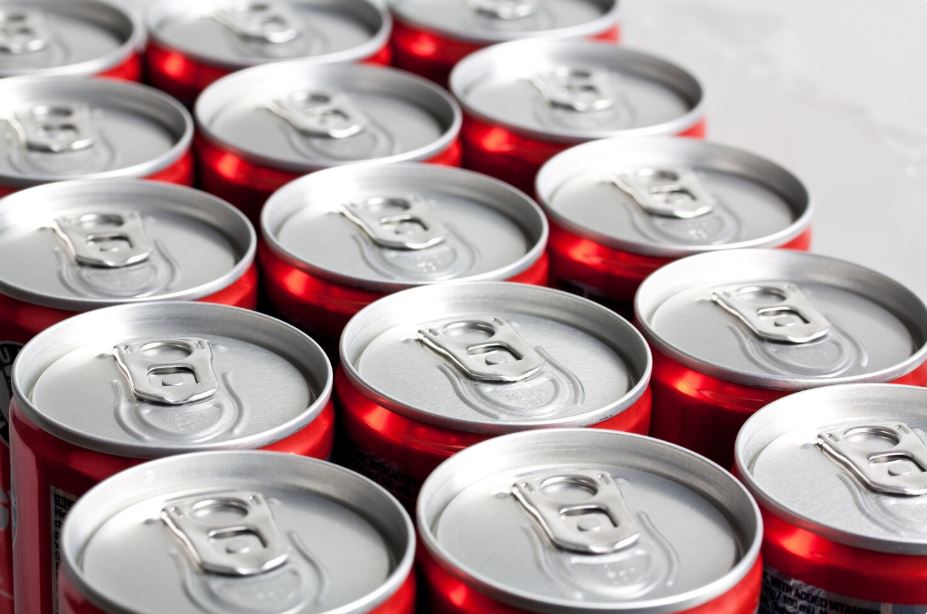

The Coca-Cola section of any American grocery store today looks exactly the same as it did ten years ago: the red cans in their recognizable rows, the green Sprite bottles, the white Fairlife bottles with their tidy nutrition labels, and the Zero Sugar options taking up more shelf space than they used to. It doesn’t seem like a business in the midst of a particularly successful year. The stock chart, however, presents a different picture. Coca-Cola shares have risen nearly 10% in 2026, closing at $76.27 as of Monday’s close, just 7.7% below the 52-week high of $82.00 reached in February, while the S&P 500 has fallen by about 7% due to concerns about the Iran War, oil prices above $110 per barrel, and ongoing inflation anxiety. KO has been subtly doing the opposite in a year when the majority of portfolios are giving the impression that they are slowly eroding.
The explanation is almost comically straightforward. Investors who are anxious about the economy tend to gravitate toward businesses that consumers continue to purchase regardless of macroeconomic conditions. During a recession, you make many cuts. Usually, you don’t stop purchasing bottles of water, juice, or soda. Coca-Cola’s products are exactly the kind of purchases that endure during economic downturns because they are reasonably priced, dependable, widely available, and shielded by brand loyalty that most consumer businesses would have to work for decades to develop. The company operates in more than 200 countries, makes the majority of its money outside of North America, and uses an asset-light business model that allows bottling partners to handle the capital-intensive production while Coca-Cola concentrates on the high-margin business of concentrate manufacturing and brand management. As a result, over the previous two years, the gross margin has averaged 61.3%. Just $38.67 of every $100 in revenue is spent on production, distribution, and raw materials. It’s a structural advantage that rivals haven’t been able to match.
| Key Information | Details |
|---|---|
| Company Name | The Coca-Cola Company |
| Stock Ticker | KO (NYSE) |
| Founded | 1886 (Atlanta, Georgia) |
| Headquarters | Atlanta, Georgia, USA |
| Current Share Price (Mar 31, 2026) | $76.27 |
| 52-Week Range | $65.35 – $82.00 |
| Market Cap | ~$328.28 billion |
| P/E Ratio | 25.10 |
| Dividend Yield | 2.78% |
| Quarterly Dividend | $0.53 per share |
| Consecutive Dividend Increases | 62+ years (Dividend King status) |
| FY2025 Revenue | $47.9 billion (+1.9% YoY) |
| FY2025 Organic Revenue Growth | 5% (4% price/mix + 1% concentrate sales) |
| Operating Margin (FY2025) | 31.3% |
| Gross Margin (2-Year Avg) | 61.3% |
| Key Growth Investment | $650 million Fairlife facility expansion, Michigan (announced March 24, 2026) |
| Analyst Price Target | $90.22 (TIKR model — +19.2% upside) |
| YTD Performance (2026) | +10% (vs. S&P 500 -7%) |
| Products Sold In | 200+ countries and territories |
| Reference Website | Coca-Cola Investor Relations |
The company’s 2025 results were exactly what defensive investors needed to see, even though they weren’t particularly impressive by growth-stock standards. Revenue for the entire year increased by 1.9% to $47.9 billion. At $15.0 billion, operating income increased by 5.1%. Organic revenue increased by 5% due to a 1% increase in concentrate sales and a 4% improvement in price and mix. Organic revenue is a cleaner metric that eliminates currency fluctuations and portfolio changes. It is important to focus on that pricing power. During an inflationary period, Coca-Cola increased prices in several markets while maintaining a relatively constant volume. SLMG Beverages, the company’s biggest bottler in India, has warned that Middle East-related packaging cost inflation could drive up prices. This is undoubtedly a challenge, but it also shows that the brand can absorb and pass on cost increases in ways that lower-tier beverage companies just can’t.
The announcement on March 24 of a $650 million commitment to expand the Fairlife production facility in Michigan received the least amount of attention, but it arguably deserves the most. Carbonated soda is not what Fairlife is. It’s ultra-filtered milk, a high-end dairy product with a nutritional profile that appeals to precisely the health-conscious consumer groups that have traditionally had doubts about Coca-Cola’s main offerings. There will be about 150 new jobs, two new production lines, and an additional 245,000 square feet of space. The size of that commitment shows how Coca-Cola’s leadership views the coming ten years: not as a soda company defending dwindling sales, but as a whole beverage company aggressively growing into the categories where younger consumers are already spending. With 75 stops in 30 countries, the FIFA World Cup 2026 Trophy Tour provides the main brand with a worldwide promotional tool that no rival can match at a similar price.
The basic argument has been strengthened by the technical picture. Shares fell to $74.07 after hitting $82 in February. They found support at the intersection of the 20-week moving average, a previous resistance zone from the consolidation base, and close to the 50% retracement of the previous upswing. Technical analysts refer to this type of support structure as “confluence,” and it is significant because it held up well. The weekly candle that followed formed a bullish hammer pattern, a reversal signal with a respectable track record. The 100-day moving average, which offers an extra floor, is located close by at $73.64. Using a valuation model that runs through 2028, TIKR analysts have set a target price of $90.22, which implies a 6.5% annualized return and a total upside of about 19% from current levels. By AI-stock standards, that is not an exciting figure. It’s not meant to be.
The elegance of KO’s placement in the present setting is difficult to ignore. Few businesses on the planet have earned the title of Dividend King after 62 years in a row of dividend increases. a yield of 2.78% at current prices, which is higher than that of many short-term bonds and the majority of savings accounts. a beta that is so low that when the overall market has its worst week in months, the stock hardly moves. The risks are real: soda volumes are under secular pressure in health-conscious markets, long-term revenue growth has averaged just 3.7% over the previous three years, and currency translation from overseas operations can unpredictably affect earnings. However, Warren Buffett has held Coca-Cola for decades without flinching for a reason. The company makes money in almost every economic situation, returns nearly all of that money to shareholders, and has a strong brand that would require tens of billions of dollars to develop from the ground up. That combination has a specific and quantifiable value in 2026, when everything else seems to be looking for a floor.
